(The Financial News—November 7, 1888)
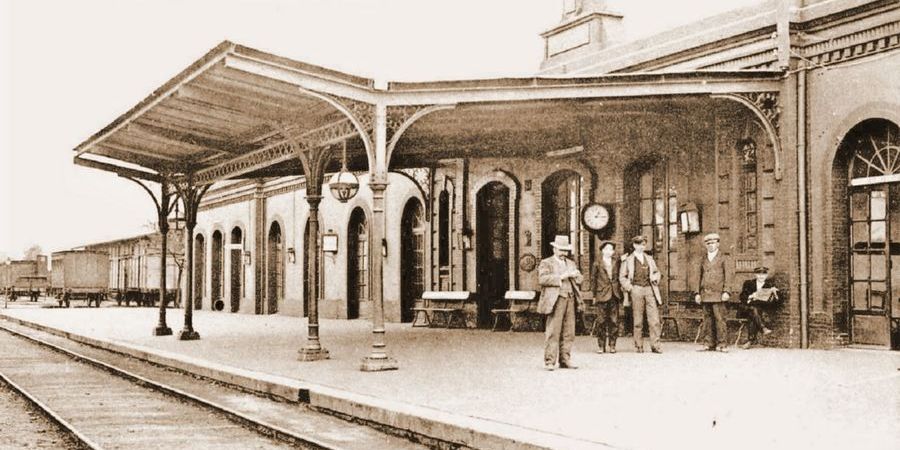
HUELVA, November 4.—It is long since a journey, the primary object of which was non-political, has excited so much interest as that of Señor Cánovas del Castillo in his capacity of chairman of the Anglo-Spanish Zafra and Huelva Railway Company, just made from Madrid to Zafra, and thence to Huelva. A journey over a new railway of this character by the chief of one of the great political parties, whatever his real motive or intention, must have its political side… The Zafra-Huelva Railway has special importance for those interested in the success of English enterprise in Spain. It is an important trunk line, which has not merely been built by English capitalists, but which in part for some time past, and now in its entirety, will be worked on English principles. The undertaking is one of the first magnitude. The difficulties overcome in traversing at right angles the Sierra Aracena, a spur of the Sierra Morena, have been immense. Instead of traversing the Sierra superficially, the promoters have pierced it with tunnels, and deep precipitous cuttings have been made through the solid rock, of which six million cubic metres have been removed. Aerial bridges and viaducts span the rivers and the deep chasms, and a lofty embankment forms no considerable section of the line. This railway, in the most unexpected manner, after crossing the inhospitable Sierra, opens up smiling, fertile valleys, whose fruits and wines have hitherto been shut out from the world. The owners of the mines of copper, silver, nickel, and lead, and quarries of marbles, rivalling those of Carrara for white and those of Algeria for coloured stone, will also now find an outlet for their productions, and these mines are already being developed in a manner more American than Spanish. The railway further places the provinces of Estremadura, the cereal granary of Spain, in direct communication with the heart of the Peninsula. The line has taken seven years to construct, the work being carried on without any interruption, and in the tunnels by day and night. Sixty-seven kilometres on this side of the Sierra have been open for two years, and already yield for the traffic per kilometre nearly double the average of that on other Spanish railways, the result being partly due to the cheap rates and frequent trains. Facilities for traffic are entirely ignored on other lines, and their mismanagement is a public scandal, which the present energetic Minister of Public Works is attempting to remove. It has previously been reported in the Times that ten millions sterling of British capital are invested in this district. The Zafra Railway has cost two and a half millions, raising the total to twelve and a half millions. Señor Cánovas del Castillo in his inaugural speech did full justice to the good work accomplished by English enterprise here, and his declaration that foreign capital in Spain was well employed here, and that its employment deserved and would receive protection, elicited hearty applause from the large assembly which he addressed. The inauguration passed off without hitch or accident of any kind. The BritishAmbassador in Madrid, Sir Clare Ford, was unable to come in the inaugural train ; but will arrive here on Tuesday next and proceed up the line to Zafra.—The Times.
