
What happens when a state outsources imperial expansion to a private company?
It has been said that the British mining companies like Tharsis Sulphur and Copper Company and the Rio Tinto Company Limited created semi-colonies in Huelva. The extent and degree of this phenomenon will be the subject of a future post. What strikes me as particularly intriguing is the idea that a private company could act as a coloniser or semi-coloniser at all. Surely, colonisation is primarily a country-to-country, state-led, or state-backed phenomenon? Although, admittedly, how the economic power of multinational corporations morphs into political power is a question that should still deeply concern us today.
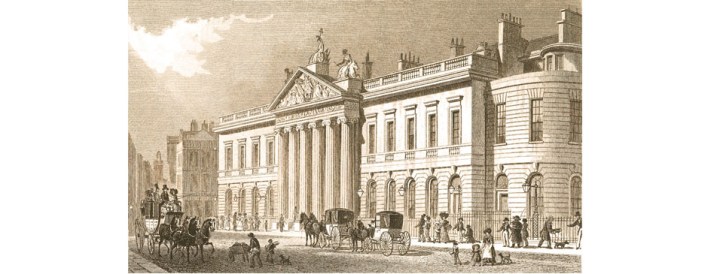
It seems the idea of a company serving as a vehicle for imperial expansion or colonization is by no means novel or uncommon. We’ve all at least heard of the East India Company (EIC) at some time or other, though its true nature has often remained a grey area for many. Was it an autonomous private company, or an official government body operating overseas on behalf of the British Crown? The answer, as we’ll see, is a fascinating blend of both.
To truly grasp what the East India Company was, consider these key facts:
- Foundation: Established by official charter from Elizabeth I on December 31st, 1600, initially granted a monopoly for the spice trade from the East Indies.
- Quasi-Governmental Powers: It held extensive rights to administer territories, collect taxes, establish and administer justice through its own courts, enter into treaties with local rulers, and even wage war.
- Military Might: The EIC maintained its own formidable military force, which remarkably, at one point, exceeded the size of the British army, boasting an army of 260,000 soldiers composed largely of Indian sepoys.
- Territorial Rulership: By 1800, the EIC had evolved into a true “company-state,” directly governing vast stretches of the Indian subcontinent, including much of what is modern-day India and Pakistan, alongside exercising significant influence over numerous princely states.
- “Nabobs”: This derogatory term referred to immensely wealthy Company servants who returned to Britain having amassed vast fortunes through often corrupt trade and administrative practices in India. Their extreme wealth gave them considerable political influence back home and was a frequent source of public debate and conflicting opinions in Britain.
- Decline and Dissolution: Through successive charter renewals (notably 1793, 1813, 1833, and 1853), the British Crown slowly whittled away the EIC’s powers, culminating in the Government of India Act of 1858. This act, a direct response to the Indian Rebellion of 1857, formally transferred total sovereignty of the Indian territories from the Company to the British Crown, thus establishing the period known as the British Raj. The EIC was officially dissolved in 1874.
This form of imperial expansion through the creation of “company-states” was indeed by no means uncommon. I would go as far as to say that it represented a systemic approach to privatized empire building – a hybrid model of imperial expansion driven powerfully by merchant capitalism.
Other notable examples of corporate imperialism include:
- Dutch West India Company (WIC): Established slave-trading forts in West Africa and settlements in the West Indies and North America, most notably New Netherlands (which later became New York).
- Dutch East India Company (VOC): A powerful rival, it established and governed colonial cities, maintained its own military forces, and engaged in wars, famously operating with vast autonomy.
- British Royal African Company (RAC): Chartered in 1672 as the English slave-trading monopoly, the RAC maintained extensive African trading settlements and provided military protection for its forts, arguing this was essential for the highly advantageous transatlantic trade.
- British Royal Niger Company (RNC): Chartered in 1886, the RNC amalgamated British business interests in the lower Niger region, effectively administering large territories.
- British South Africa Company (BSAC): Chartered in 1889 by Cecil Rhodes, the BSAC was granted extensive rights to make treaties, promulgate laws, acquire economic concessions, establish a police force, and develop infrastructure in south-central Africa (modern-day Zimbabwe and Zambia).
Getting back to our original question concerning the British mining companies in Huelva and the purported semi-colonization, we now at least have crucial historical context to understand the mindset and precedents behind why such a situation might have arisen.