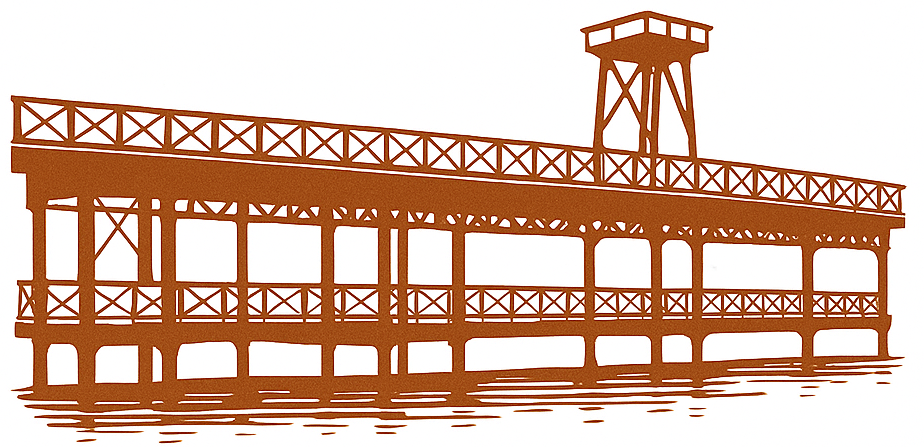
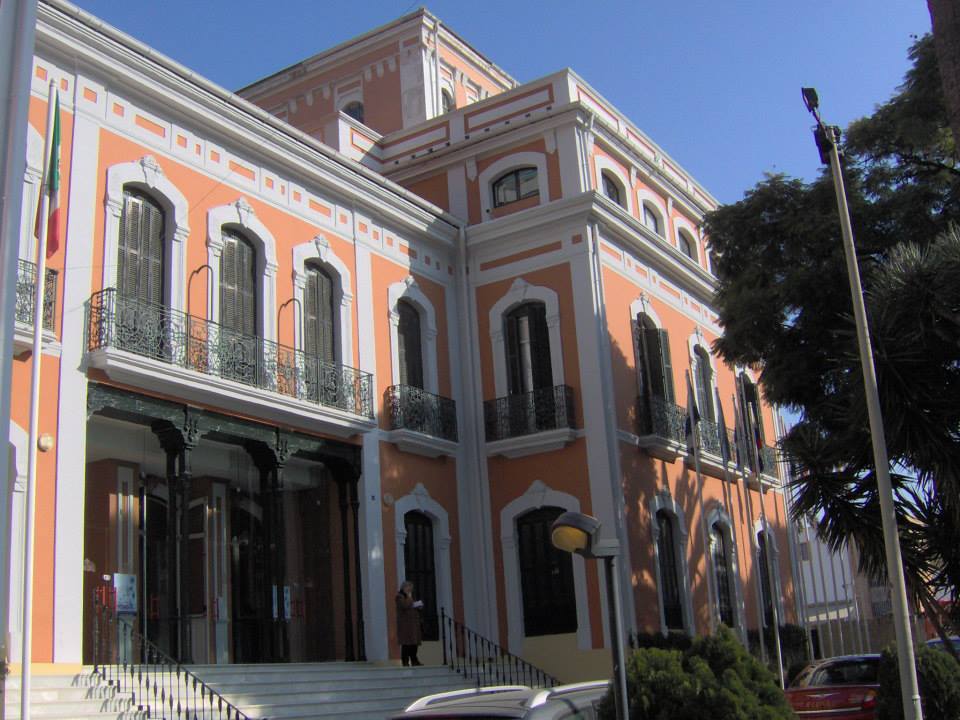
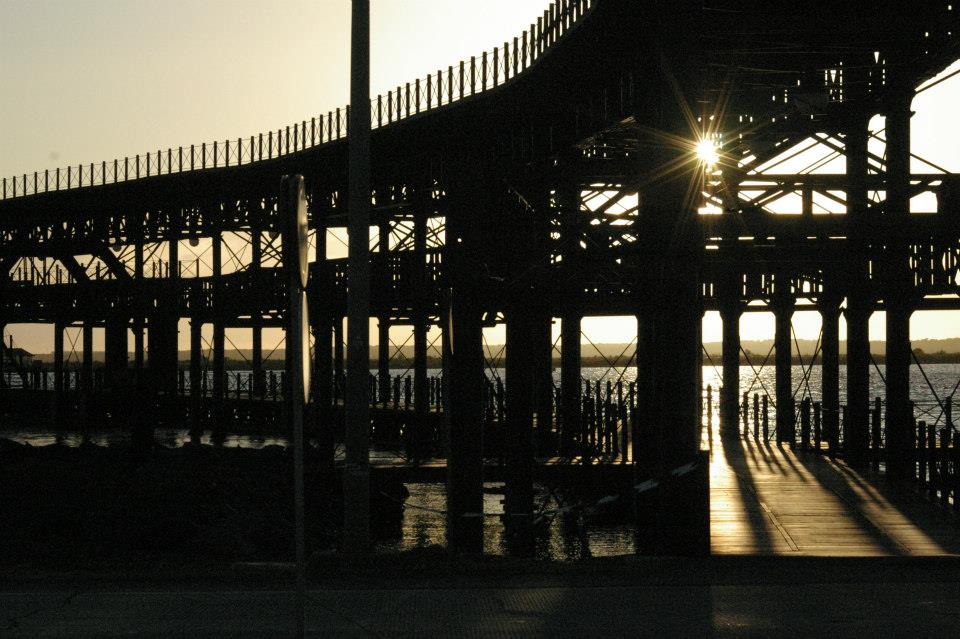
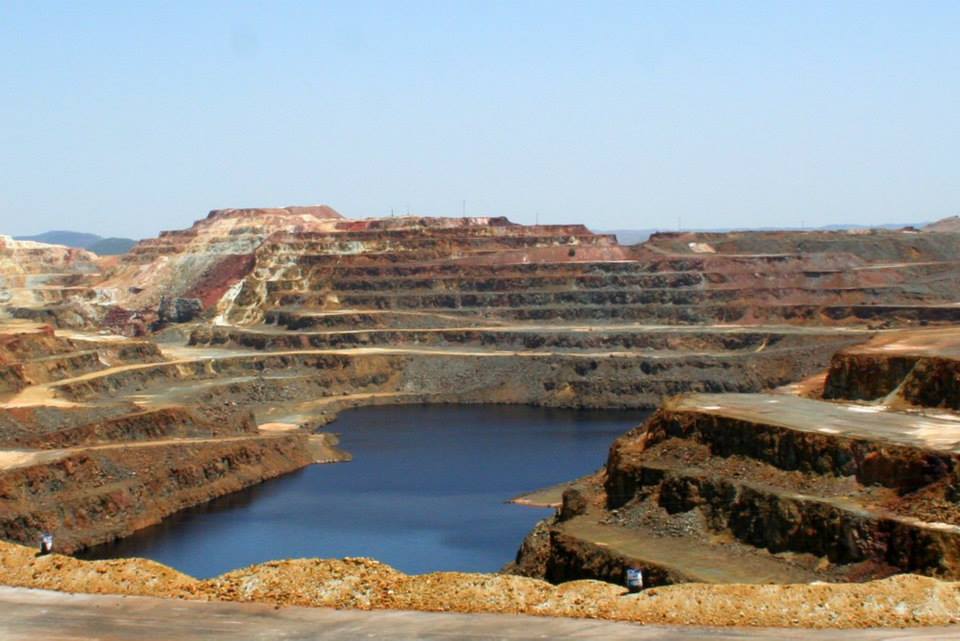
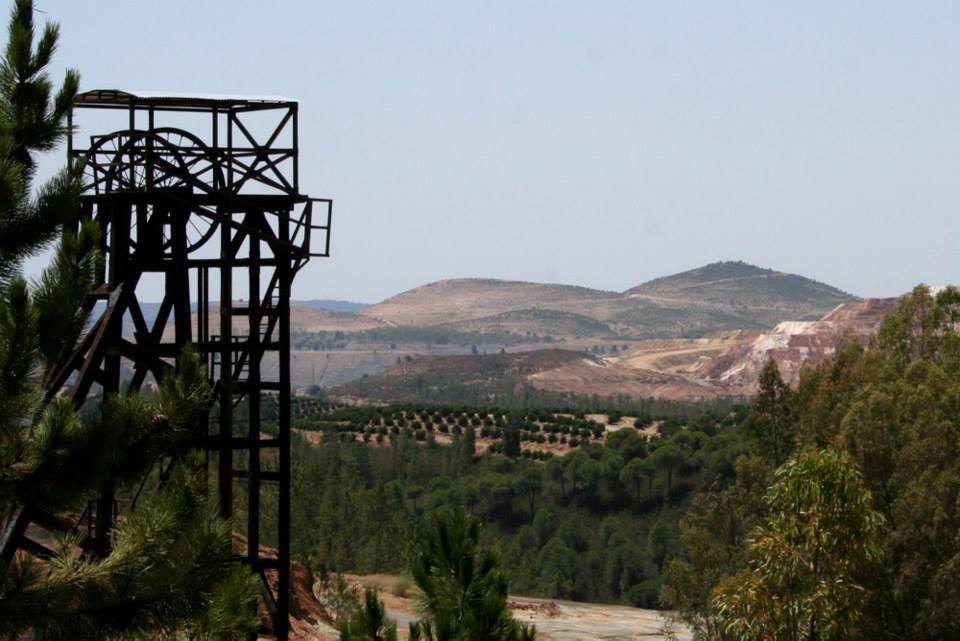
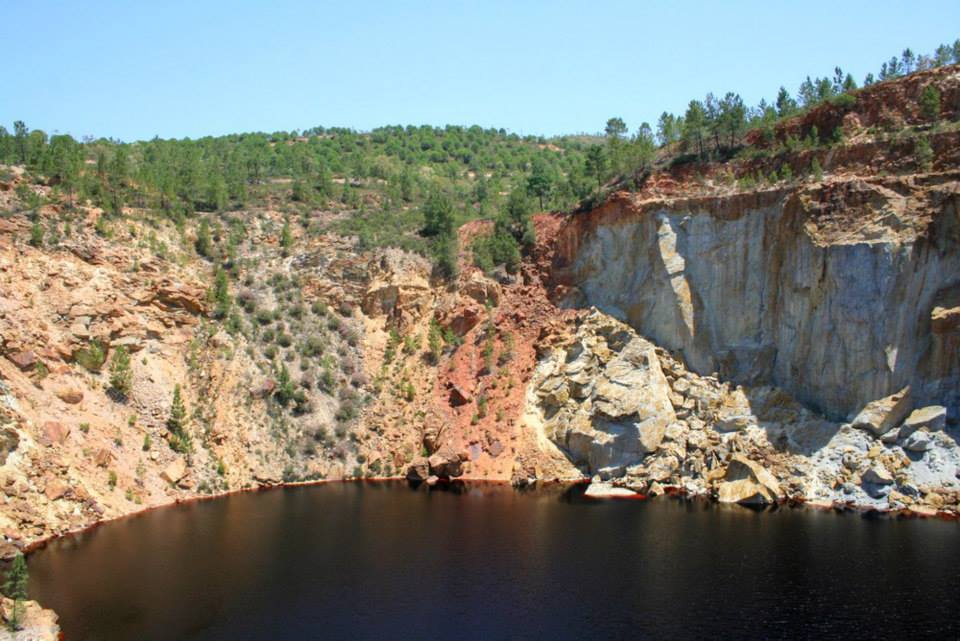
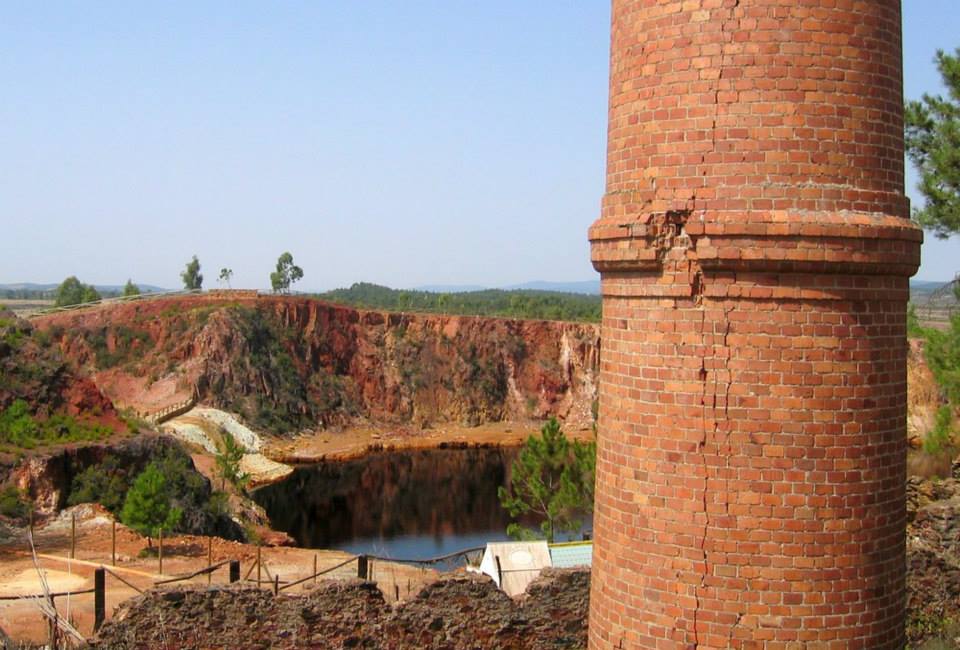
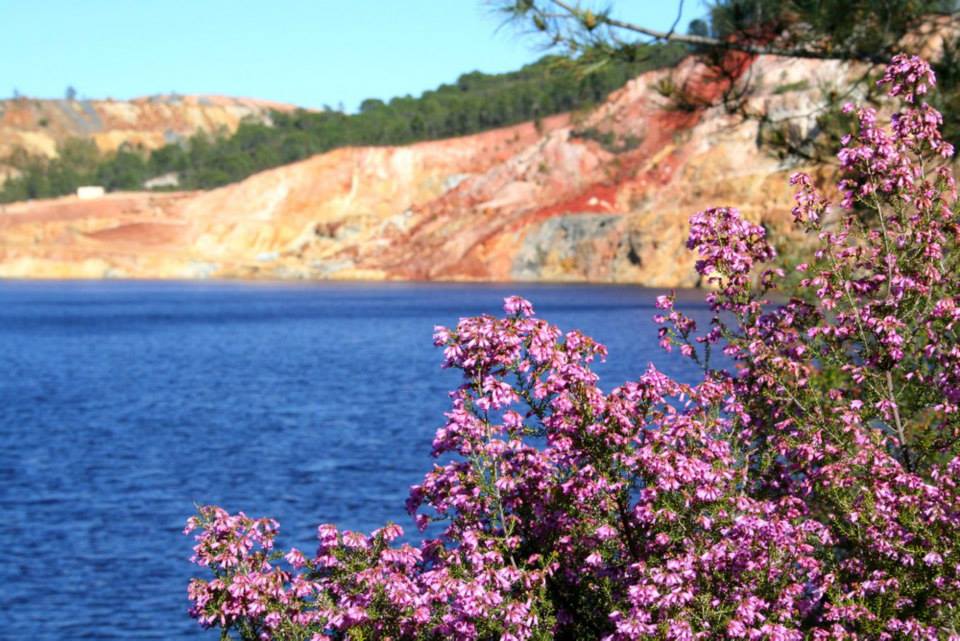
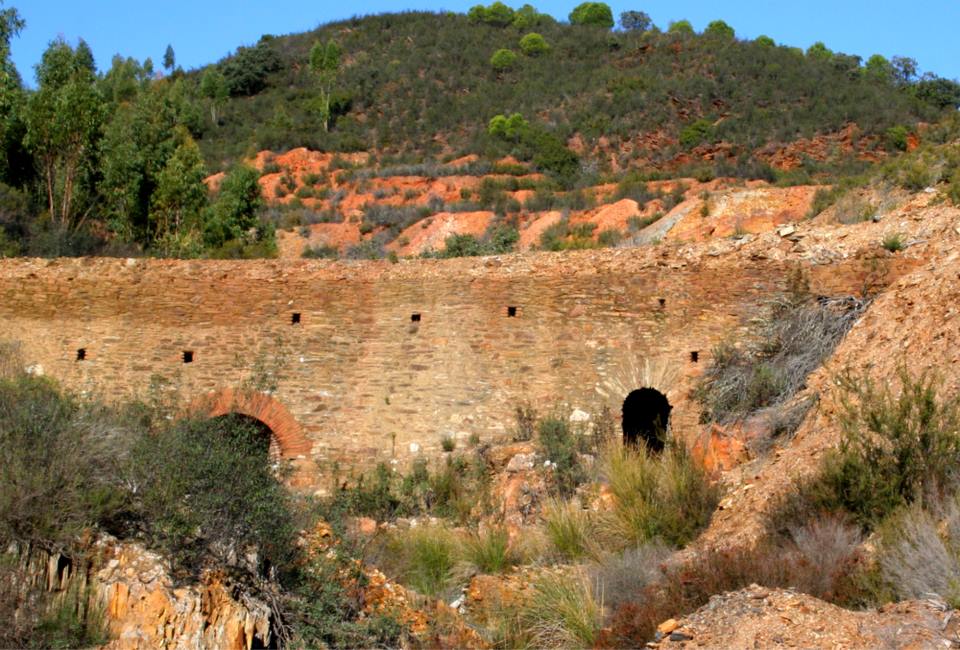
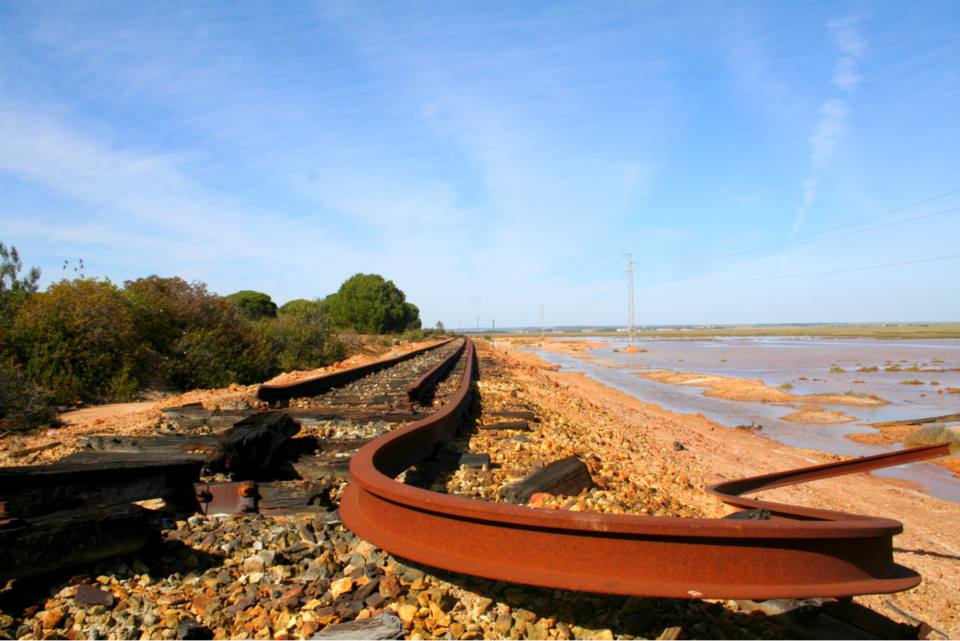
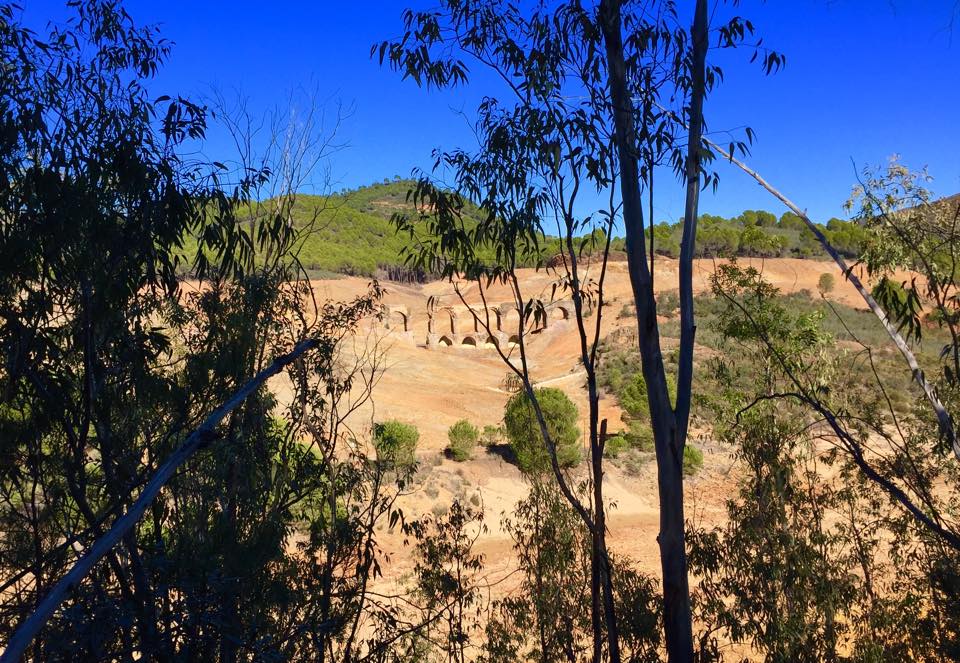
What can you still explore and experience today that will take you back to the mining boom and British presence in Huelva during the Victorian era? Rather a lot in fact. There are pyrite mines, big and small, dotted all across the Iberian Pyrite Belt. Many of these mines can be easily and freely visited (with caution). You can walk along hundreds of kilometres of mining railways with abandoned railway stations, tunnels and iron bridges in ruins. There are important loading piers, feats of 19th century engineering, still standing and visitable: two on the Odiel River at Huelva capital and Corrales and two on the Guadiana River at Puerto de la Laja and Pomarão. You can contemplate an astonishing wealth of architectural heritage in Valverde del Camino, Minas de Riotinto, and Huelva capital, among others, which include whole neighbourhoods built in Victorian style. And on a different note, there are protestant graveyards in Huelva city, Valverde, Tharsis, Minas de Riotinto, and São Domingos where you can see the graves of those who came to seek their fortune in Huelva, and stayed forever.
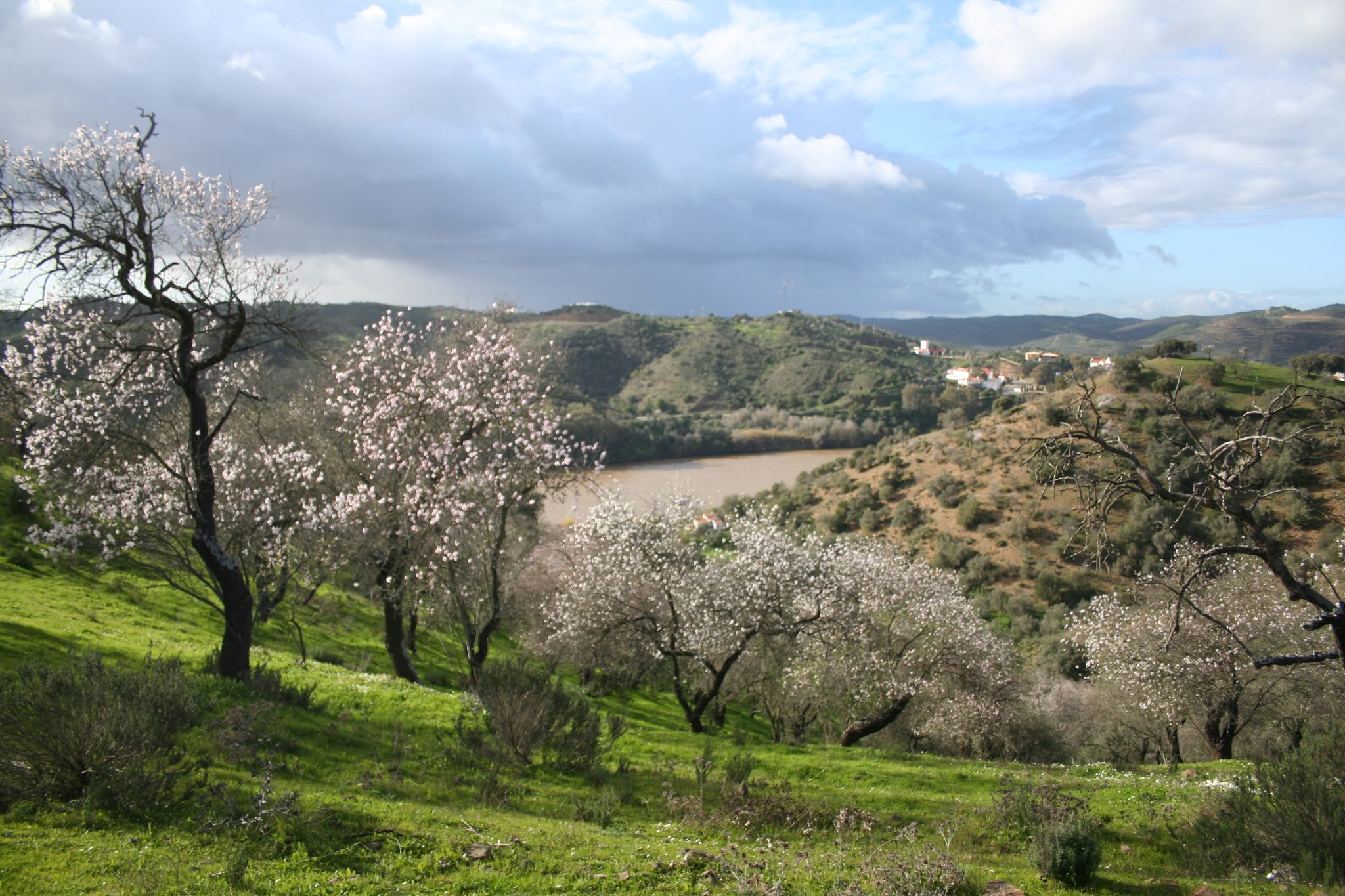





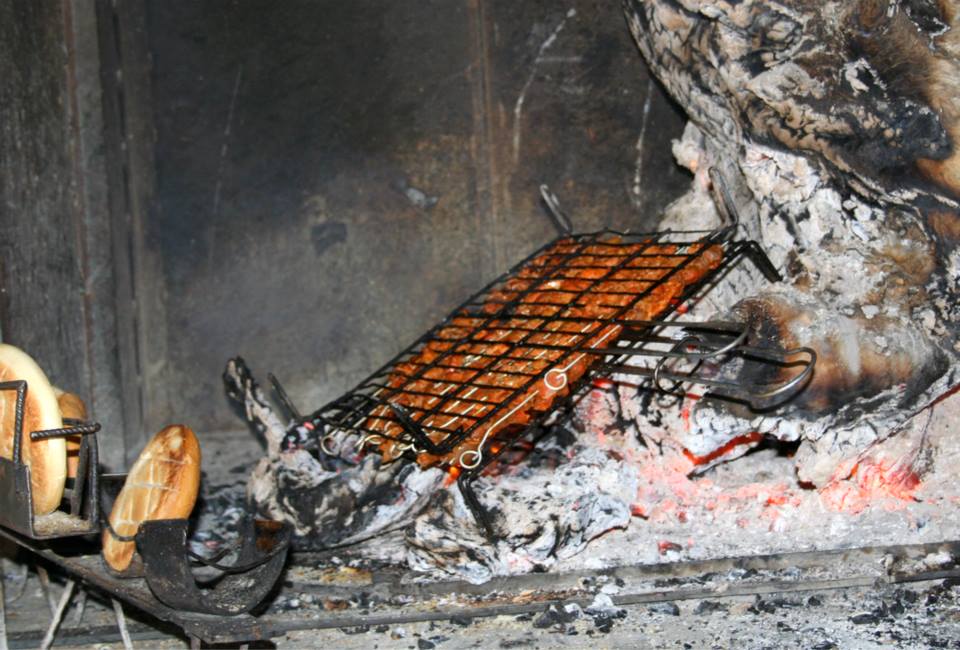
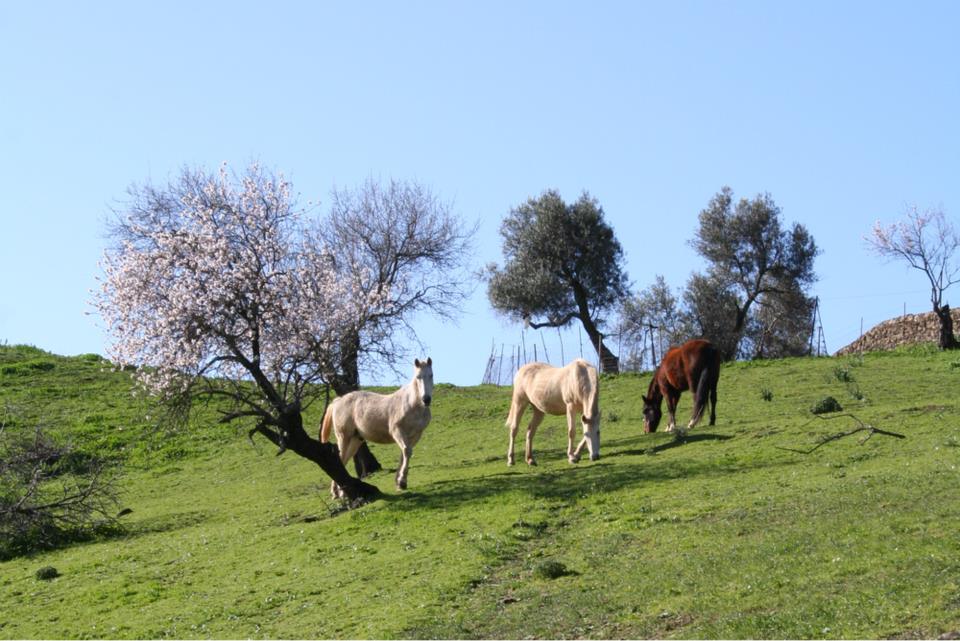


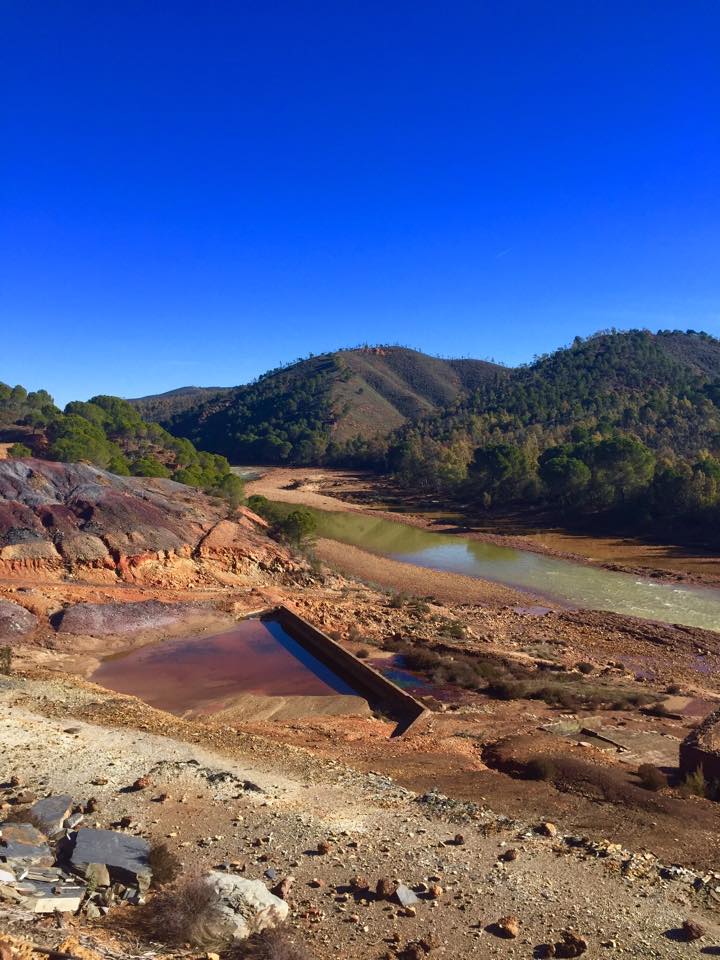
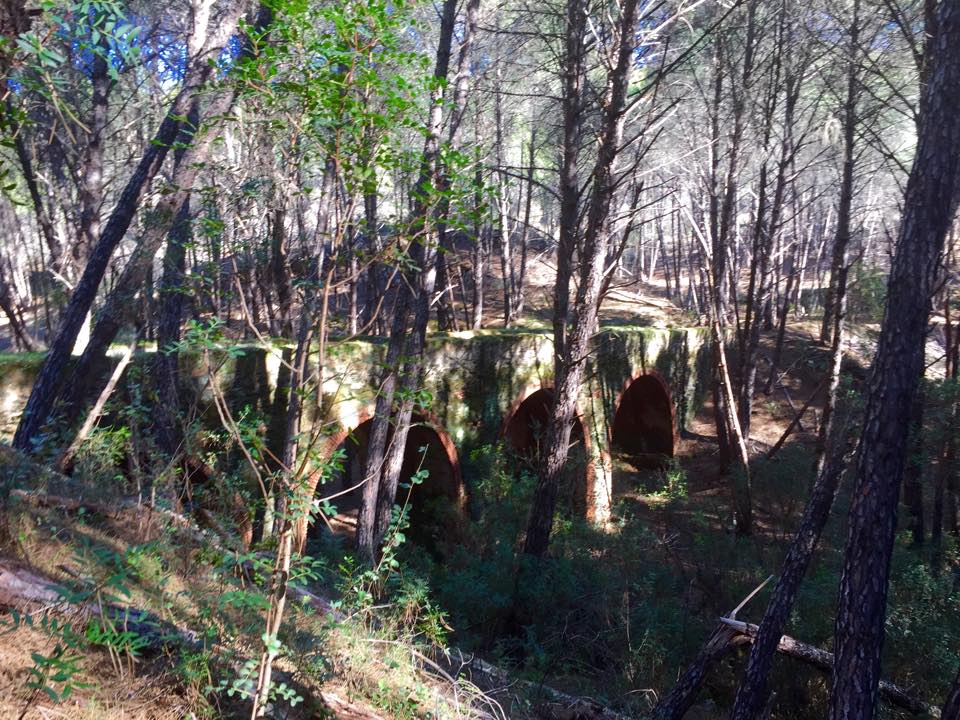
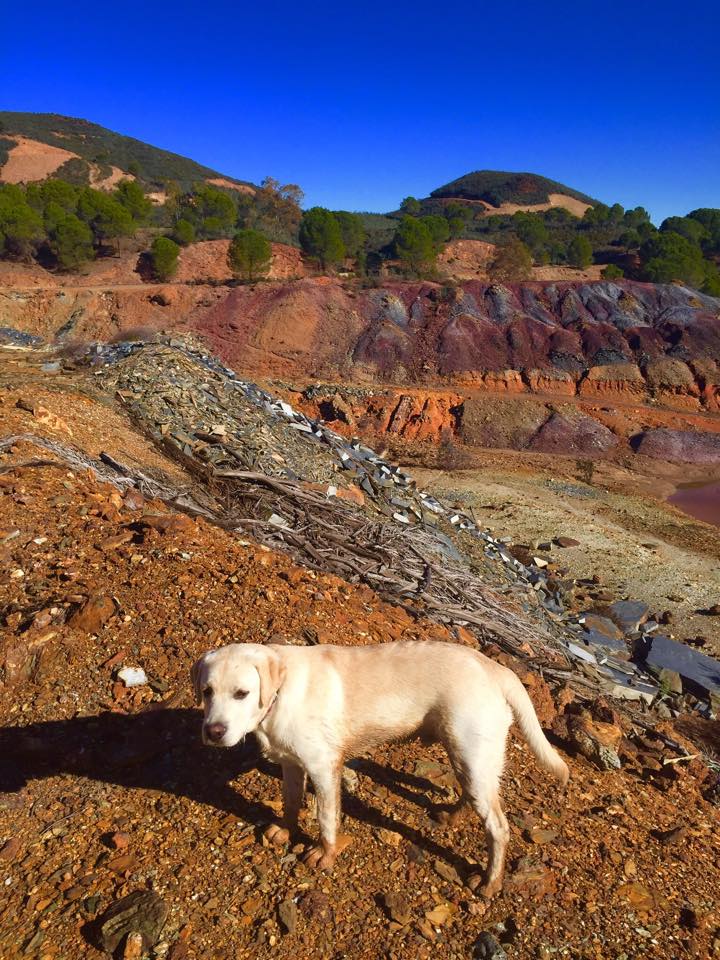

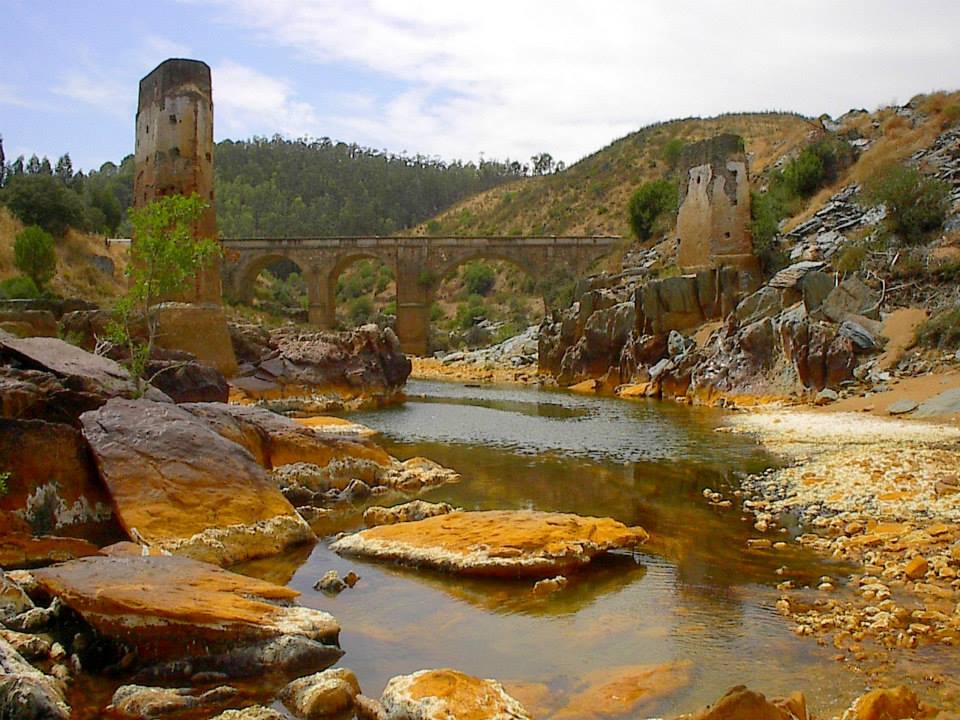
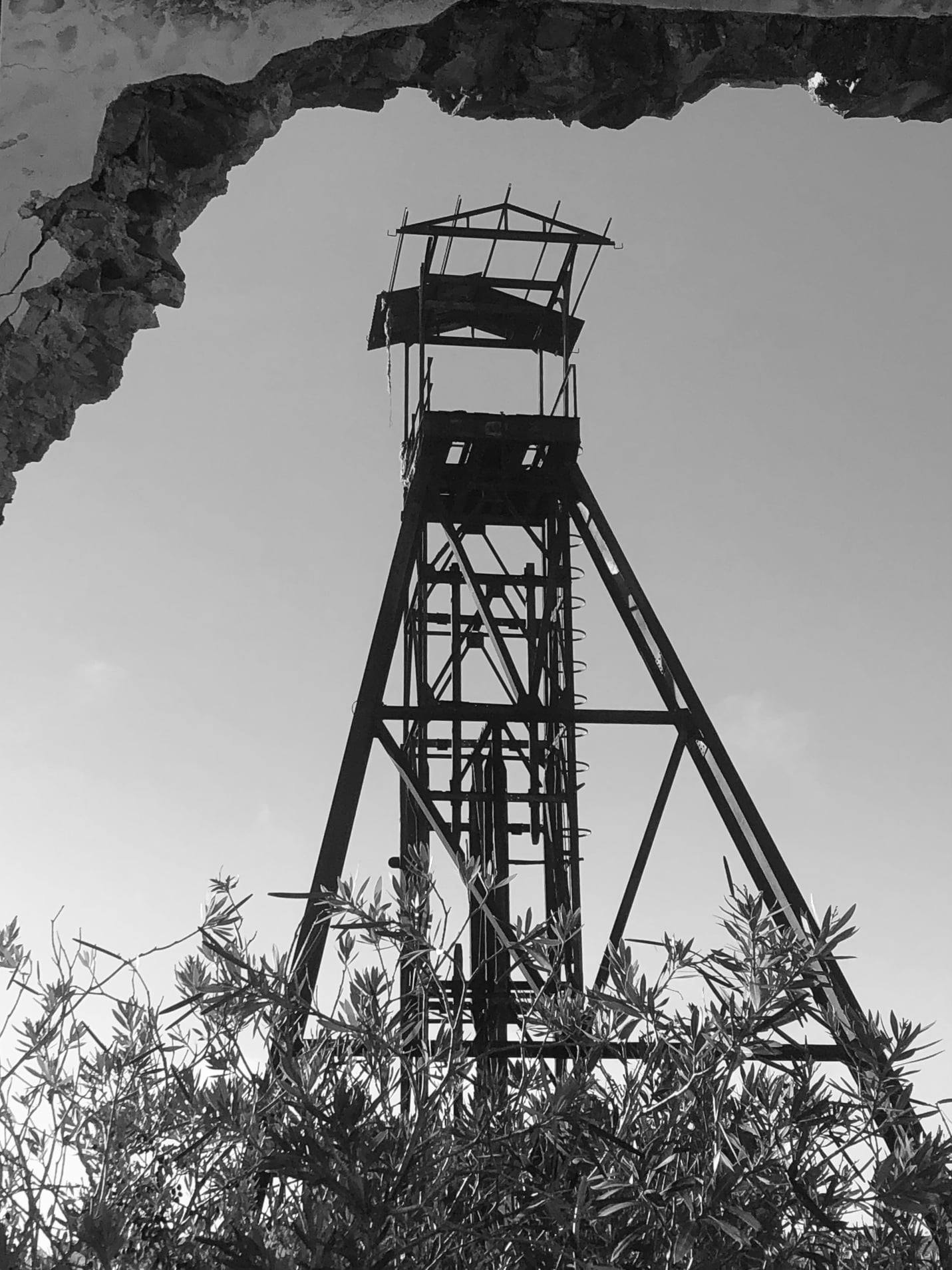


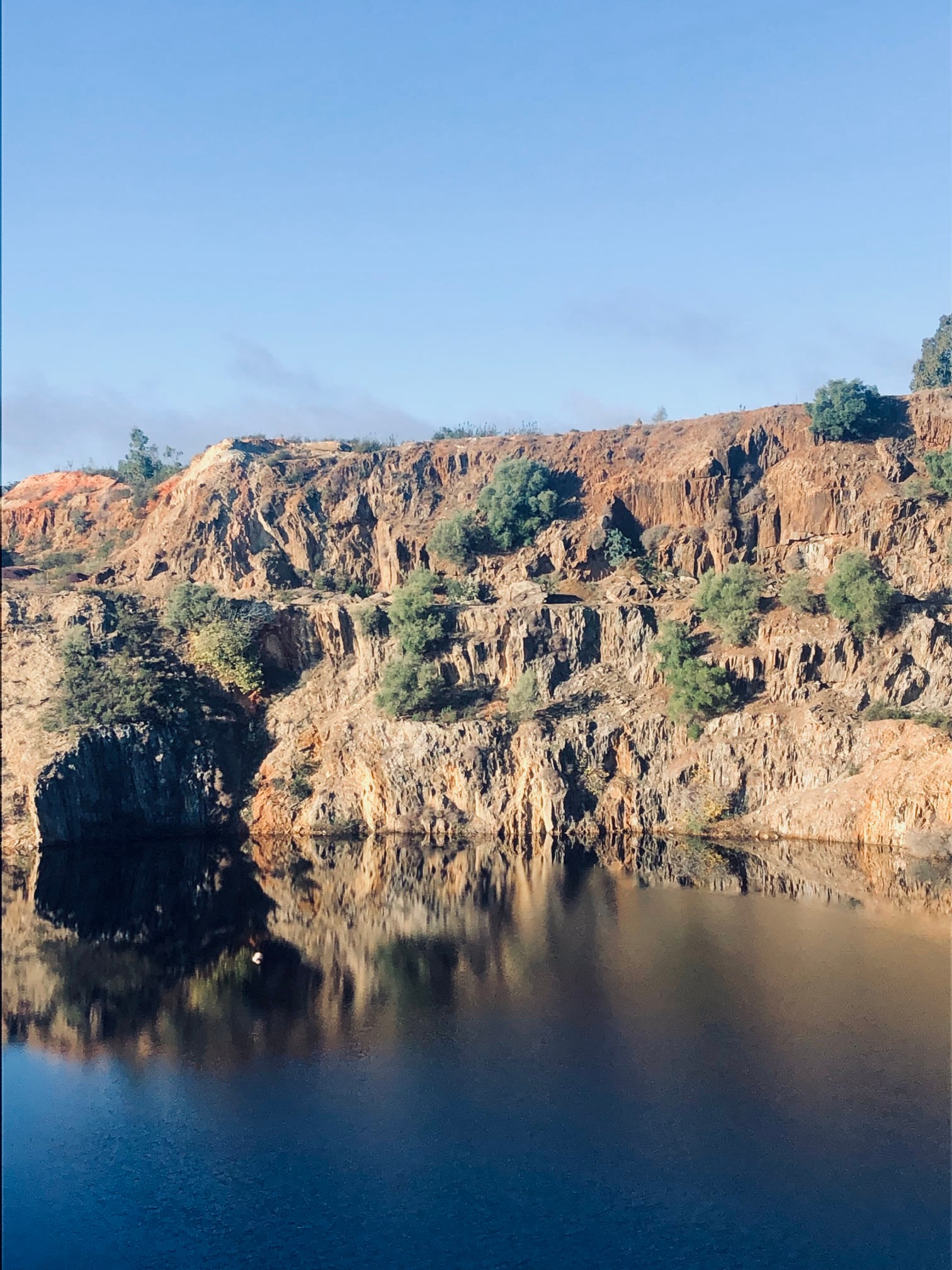
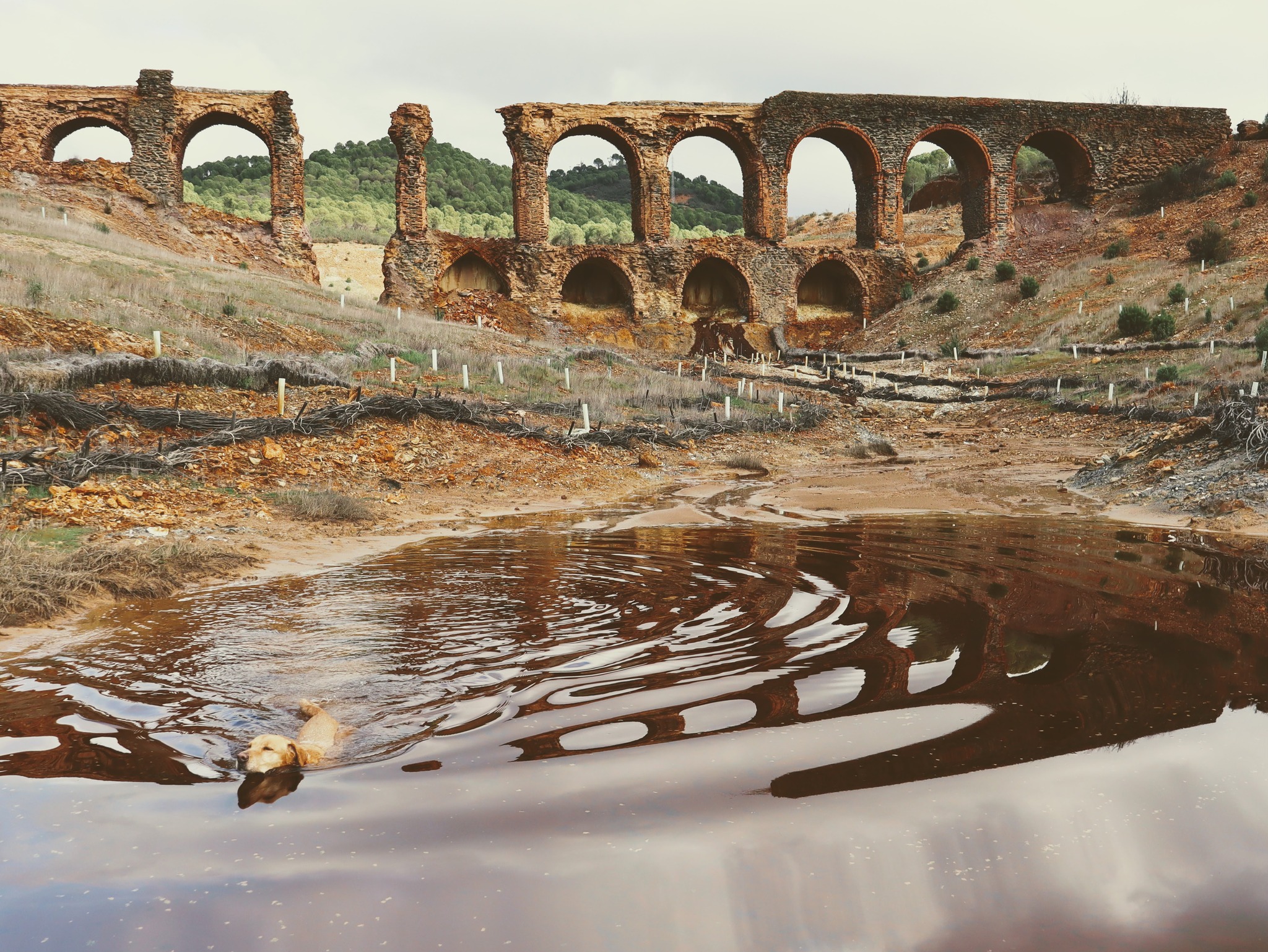
This section of the web is for my first hand reports as I indulge myself in my passions: Huelva’s unique landscapes, culture, history and gastronomy, British industrial heritage of pyrite mines and railways, photography and of course long country walks with family, friends and our two faithful furry friends Oscar and Kiera.
