WHAT’S YOUR PROFILE?
In Part 1 of A Beginner’s Guide to Investing in the Huelva Pyrite Mines we set the scene. The Rio Tinto Company had published a prospectus offering an investment opportunity. This prospectus was quickly contested by the Tharsis Company in another article and then the Mining Journal published Rio Tinto’s reply. You decided, quite rightly, to do a due diligence. Warren Buffett wasn’t around those days but he would have advised you not to invest in a business that you don’t understand. Before delving into the contents of the prospectus and the subsequent newspaper articles, let’s take a step back, get some context and explore who you are, or would have been, and what you already know. Here are some likely profiles of archetypal business owners and investors of the day to choose from. Which one would resonate with you most as we go deeper?
A textile factory owner from Lancaster. Your industry has been radically transformed and is at the centre of the Industrial Revolution in Britain. You have experienced firsthand the introduction of the transformative factory system, and the use of steam power. You went through the “cotton famine” shock of the American Civil War in the early 1860s. Up to that time you received 80% of your cheap cotton, produced by slave labour, from the southern states of America. When the war broke out there was a blockade on trade with the south and the supply chain was broken. You learned three things from that experience: you could win or lose a fortune by stockpiling raw materials at the right time; it was a good move to quickly diversify and strengthen your supply chain with alternative sources of cotton from Egypt and India; and a bold decision to use your spare cash to invest in new factories and machinery can pay off. If you can hold your nerve you can benefit from uncertainty. This Rio Tinto opportunity seems high risk and at the same time promises high returns.
A shipbuilder from Tyneside. The switch from wooden to iron ships, the introduction of steam power, the explosion of global trade and the abundance of iron and coal in the area have all allowed you to create a shipbuilding empire for both merchant and naval vessels. You know better than most the importance and demand for metals—not only iron and steel, but copper and copper alloys for boilers, condensers and engine parts. Some vertical integration may be of interest to you and the Rio Tinto opportunity seems to make sound business sense.
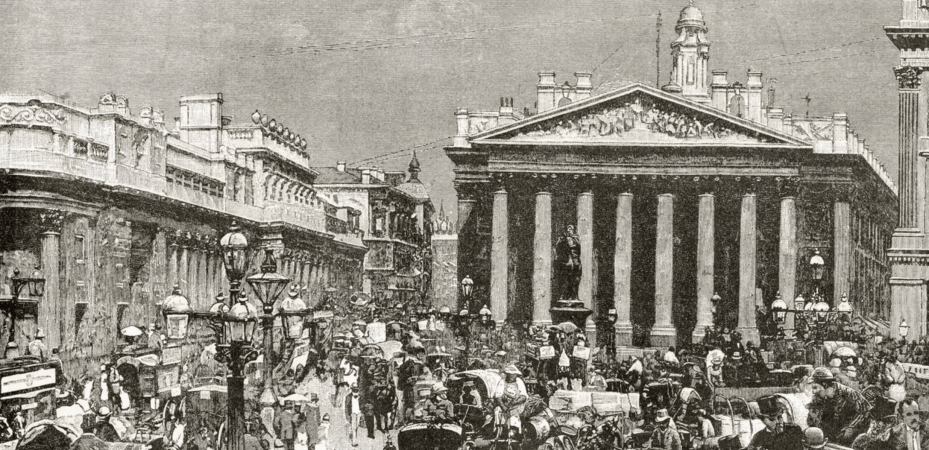
A family owned merchant bank in Lombard Street. London is the undisputed world’s financial centre and your wealth has come from financing world trade, issuing massive loans for European wars and lately selling U.S. railway bonds to eager investors etc. Your wealth is immense and your reach is considerable. Indeed, your family also has banks based in Frankfurt, Paris, Vienna and Naples. When a foreign government like Spain decides to sell its most valuable asset to avoid defaulting on debt, you are very well informed on the details of the operation well in advance and at the highest level imaginable.
A member of the aristocratic landed gentry. Traditionally, you have been living from your lands and have looked down on those who have actually had to work for a living! However, agriculture is not as stable as it used to be and there is a serious threat from grain imports, particularly from the U.S.A. Furthermore, since the beginning of the 1870s there has been an agricultural depression and you think it’s time to secure your future and invest in “paper” like government bonds, railways bonds and mines. Times are changing and it’s time for a change.
A commodity trader at a private merchant house. In the good old days your firm commanded vast sums of capital, earned through the global trading network, in commodities like cotton, wool, grain and most importantly, metals. You acted as an intermediary and your business was based on long-term personal contacts and trust. But things are changing fast and the world is speeding up. With international telegraph communication you can know the prices of a commodity in New York or Calcutta almost in real time, so futures trading is now becoming a viable option. This is a few years before you help to establish the London Metal Exchange (LME) in 1877, but the trends are clearly already there. Your experience trading metals makes you think the Rio Tinto opportunity is a good one—a very good one at that.
A railway tycoon. You are a self made man with a similar status and aura to Bill Gates or Steve Jobs nowadays. Through mind-boggling technology you represent “the annihilation of space and time”, unstoppable progress and limitless wealth creation. Railway bonds are seen as a safer, surer bet than government ones, grandmothers and greengrocers are investing in the railway mania. Local politicians think twice before making a decision without your blessing. Your railways are the metal veins that pump economic life blood and prosperity throughout the country. You are a visionary, maybe we could even sometimes say an opportunist, but you combine practical cutting edge engineering with capital and business acumen—and all, as far as you’re concerned, for the public good. Whichever way you look at it, the Rio Tinto opportunity would be exactly the type of business you’d like to be in from the get-go.
Coal Mine Owner from the Rhondda Valley in South Wales. You make your fortune through brute-force extraction of high quality “smokeless” steam coal driven by an insatiable demand. Your customers include the Royal Navy’s steam-powered vessels, the railway boom and the nearby copper smelting hub at Swansea, plus the iron foundries and steel works at Cyfarthfa and Dowlais. You know better than anyone what it takes to run a profitable low-tech mining operation of a finite resource at low cost, and as for the market for pyrites, just ask your customers. Rio Tinto seems like a natural investment option and a lucrative business partner for your coal exports. When people talk about “fossil imperialism”, you smile—if they only knew the half of it.
A steel manufacturer from Sheffield. The last 15 years or so have been good ones since the Bessemer smelter technological innovation in 1856 made cheap steel production a reality, and locating your steel works near the raw materials of coal and iron ore has been highly beneficial. Your company is a partnership between you and four trusted associates, each with their own expertise, which has worked well until now. But at the height of your commercial success you can see the writing on the wall. As a partnership you have cash flow issues and can’t raise the capital you need to invest in modernising your technology the way the joint-stock limited liability companies can do. There has also been a shift in the economics of your business, nowadays, with the reduction of transport costs it makes better sense to be closer to customers and markets for fast cheap delivery than to the raw materials. Your main customer these days are railway companies in North America but sales are starting to dwindle as the US and German steel corporations gain traction. You have some big choices to make and maybe divesting and reinvesting in Rio Tinto would be one of them.
These are just some of the plausible archetypal investor profiles of the day. Which one would you choose? I’ll keep those industrialists directly involved in the copper and chemical industries for a later post when we look at “Copperopolis”, the international copper smelting hub of Swansea, and the powerhouse of the British chemical industry, the St Rollox Chemical Complex Glasgow—both possible direct competitors or close collaborators for the newly created Rio Tinto Company.
In Part 3 we will widen the scope and consider what an average investor would know about the business climate in Britain: developments in corporate law; the latest developments in the Industrial Revolution; London as the world’s financial centre; and the impact of the massive trading network loosely referred to as “The British Empire”.
