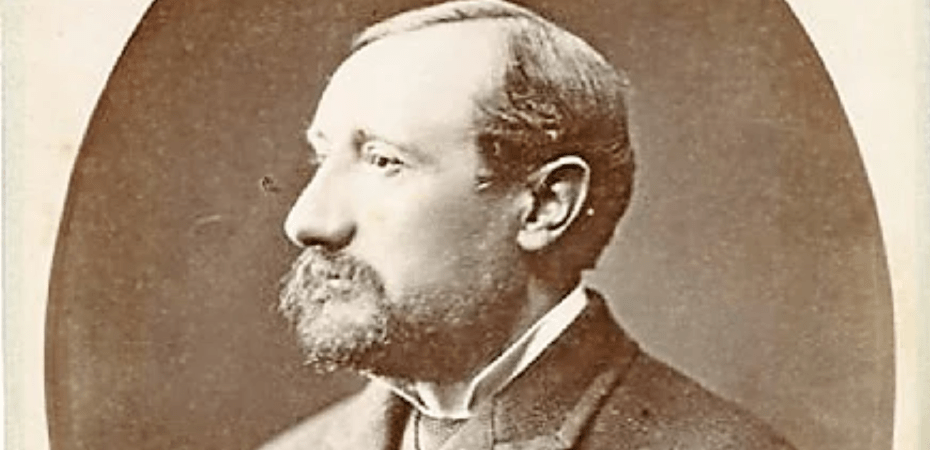
An important, powerful, and highly interesting figure has vanished from the financial life of London. Henry Doetsch was a remarkable man in many respects. The son of parents of relatively modest means in Coblenz, he rose to become one of the international potentates of banking. He was as well known in Paris and Berlin as he was in London. His first business dealings were in Bilbao, albeit on a small scale. Subsequently, he went to Huelva and obtained the concession for the Rio Tinto mines; with this precious document in his hands, he came to London.
At that time, his English was far from perfect, and he knew little to nothing of high finance; however, he possessed a first-class natural talent, an enormous strength of will, and an inflexible tenacity. For many months, he worked tirelessly to secure the vast sums required for such a gigantic enterprise; eventually, the house of Matheson took up the business and brought it to market for over a million pounds sterling. Today, Rio Tinto is perhaps the mine that produces the most copper in the world.
Doetsch instantly became a man of great fortune. He possessed the energy and constant resolve of a captain of the industry, great firmness, a very clear talent, and a powerful will to carry out his plans. When the Great Copper Syndicate took place and several Frenchmen blew their brains out, Doetsch was summoned to Paris. He was a good German, but he loathed mixing political affairs with banking, and he did everything possible to save France from a ruin that threatened many of its great enterprises. Upon returning from that country, he was heard to say: “I have saved a country from a disaster that could have been as bad as a small war.”
In society, he was a notable figure. He lived in a house of modest and unpretentious appearance in New Burlington Street; yet upon opening the door, the owner’s delicate taste was immediately apparent. Doetsch had a great weakness for painting; his friends sometimes laughed at his purchases, saying he was a victim of the dealers; he never believed so. Regardless, upon entering his home, one was surrounded by all manner of artistic objects; one then moved to the picture gallery, where it was impossible to find a bare spot on the walls of the spacious drawing rooms.
He was a lover of men of letters and artists, and gathered them in his home whenever he could. All the editors of Punch were his friends, and he entertained his guests like a prince.
But he himself was more interesting than everything that surrounded him. Vehement and energetic, he spoke on all matters in such a way that he always convinced everyone who heard him. He loved his friends, and everyone loved him.
May he rest in peace!
He has left a great fortune; he was a bachelor, and we do not know if his parents are still living; he was about 55 years of age. For some years before his death, he suffered considerably, and in vain he sought improvement in many parts of Europe.
After all, we do not know if he would have been happier in his native Coblenz. What is very probable is that he would have lived longer.
(La Provincia / The Weekly Sun, London).
