(Translated extract from Guía de Huelva y Su Provincia para el Año 1892 – Don José Merelo y Casademunt)
Palos de la Frontera
1,422 inhabitants – Judicial District of Moguer
It is not the place of our humble pen to describe the historic town of Palos de la Frontera, from whose port the great Columbus set sail on the memorable 3rd of August 1492 with the aim of discovering a New World; yet in attempting to do so, we shall employ every means that this subject demands, if only in the interest of the province in which we live and out of the affection we hold for it.
Its etymology is uncertain. Some derive it from the Latin noun palus, paludis, meaning lagoon or marsh. Due to the nature of its terrain, in whose surroundings there are many inlets and pools created by the periodic comings and goings of the ocean’s waters, it was anciently called Palus; the final u having softened into o, it has taken its current name: Palos.
It is wrongly called by some Palos de Moguer—and we say wrongly, because over the course of several centuries, we see it written as Palos de la Frontera in the parish books and in those of the town council, and this is also its true official name.
According to a manuscript, the original settlement was founded by Tubal, grandson of Noah, around the year 550 after the flood.
The Reverend Father Coll mentions it as follows:
“Palos!—Here is a name capable, by itself, of filling every good Spaniard with pride; a name that ought to stir our patriotism, just as the fibre of any sensitive soul is stirred when hearing the musical notes of a finely played instrument, or the familiar song of the native land, whose harmonious cadences lulled our infancy in the arms of a tender and loving mother. However much our ingratitude may strive to forget it, Palos will always be a town renowned in the annals of the world; it will always be considered the cradle of those Argonauts who, through uncharted seas and countless dangers and labours, came to discover the other half of our planet.”
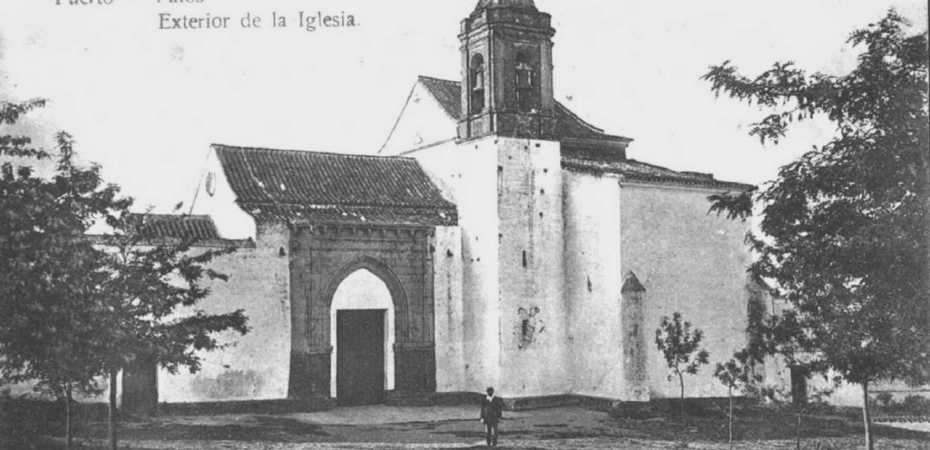
It is located on the left bank of the channel that bears its name (River Tinto), and the town, as municipal capital, consists of 273 buildings laid out over several relatively wide, clean, and well-paved streets. It was once notable for the number of noble families who lived there, though they disappeared following the discovery of the Indies.
Its terrain, though sandy, yields wine, vegetables, and exquisite fruits. Its abundant pastures support large numbers of sheep, cattle, goats, and pigs.
Within its municipal territory are the famous lagoons of the same name, where ducks, moorhens, and other waterfowl are bred.
The following are considered population entities:
Bumartista, a vineyard house; Picacho, a lighthouse house; Torre de la Arenilla, homes where the watchman and several members of the customs guards reside; El Picadro, forest dwellings.
There also stands—bringing eternal glory to the town and honour to the province of Huelva—at an approximate distance of three kilometres, and atop the plateau of a small hill, the celebrated former convent of Santa María de la Rábida, which we address more fully later.
Palos, and we do not tire of repeating it, is the point from which the caravels departed that discovered the New World.
