
(Translated extract from Guía de Huelva y su Provincia 1891)
Moguer
Population: 8,750
Judicial District: Moguer
A town situated on a small rise near the left bank of the River Tinto.
The capital of the municipality consists of 1,689 buildings, of one and two storeys, which form fairly regular streets, well paved and clean, along with several squares.
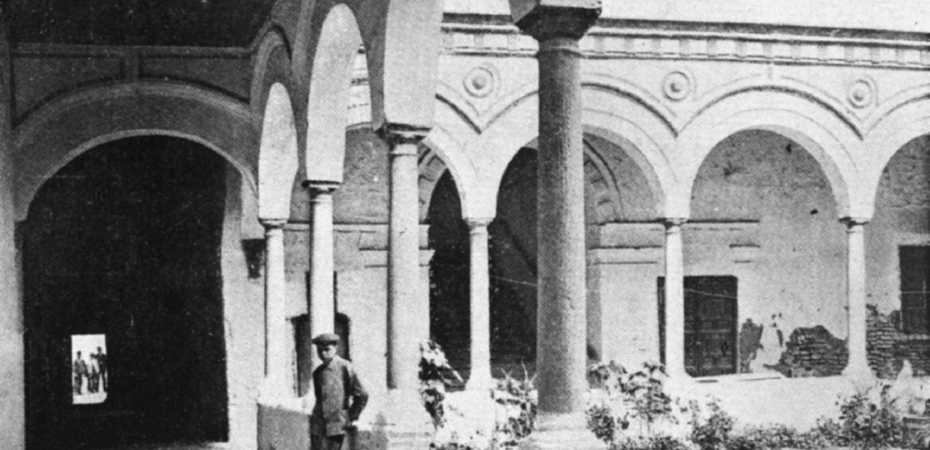
There are several houses of notable architecture, and among the public buildings are: the parish church dedicated to Our Lady of Granada, of magnificent construction; two convents—Santa Clara, with a community of nuns, and San Francisco, currently serving as a hospital; two civil hospitals, one for men and one for women, attended by the Sisters of Charity; a court of first instance, notary public, property registry, district jail, town hall, post and telegraph offices, railway station, and Civil Guard barracks.
Its principal wealth lies in the production of exquisite white wines, the basis of the town’s commerce, which are exported in large quantities.
Cereals, fruit, legumes, vegetables, and olive oil are also harvested. There are some pine woods and good pastures.
Among its industries are oil factories, soap factories, flour mills, and fine wine cellars, the most important of which is that of D. Celestino Verdier.
The municipal territory borders the Atlantic Ocean, and the land is fertile.
It has local roads and highways of the first, second, and third class.
Distance from Huelva: 39.004 kilometres.
Cognac Factory. — The active and intelligent industrialists D. F. Jiménez y Cía. have endowed this town with one of its finest industries. Thanks to their constant efforts, they produce an enviable brand of cognac, made from the purest spirits distilled from exquisite wines, which can easily compete, in taste and smoothness, with the best foreign brands.
Furthermore, the gentlemen of Jiménez are studying all the best production systems known to date, and it is therefore to be hoped that the significant sums of money that used to leave the country for foreign imports will soon remain here, to the benefit of the province’s own people.
