In all the venues for Football or Lawn-tennis, etc., where the skilled members of the Huelva and Riotinto clubs have played, whether in the aforementioned Mines, in that capital, or Seville, our good correspondent has sent us detailed reviews of these matches; but being currently ill, he has been unable to provide this service for the Match recently held in Seville, for which reason we take an abridged report from that city titled El Mercantil Sevillano, which states as follows:
Not exactly at the designated hour, a concise matter when dealing with Englishmen, but at a quarter to four, with a considerable gathering of both sexes, the announced competition between the two Clubs commenced, composed of 22 members, eleven representing Huelva and an equal number for Seville.
L. Birchell, captain; Wakelin, Thomsen, Jones, Normand, Hodge, Oliver, Hopper, Birchell, García, and Mundell. (Huelva.)
Messrs. Mac-Coll, captain, Plews, Charlesworth, Thomson, Logan, Stinegger, Poole, Welton, White, Geddes, and Merry. (Sevilla.)
Before entering into the particulars of the “Match,” we must say that this game, like Lawn-tennis and kiska, is most popular in England. “Foot-ball,” a name composed of two words, “Foot” and “Ball,” perfectly indicates the rules of this game. In Football, everything is permitted in its play except for striking it with the hands; thus, they primarily make use of their feet, head, shoulders, back, abdomen, etc., etc.
In the match we had the occasion to witness yesterday, the struggle was truly hard-fought; we were able to observe much agility in the play, to such an extent that in the two halves, each of forty-five minutes, which were carried out, neither of the Clubs was able to win, although in honour of the truth and being a faithful interpreter of the rules of the game, the Seville Club obtained more advantages, since the ball was always played within the territory of the Huelva Club.
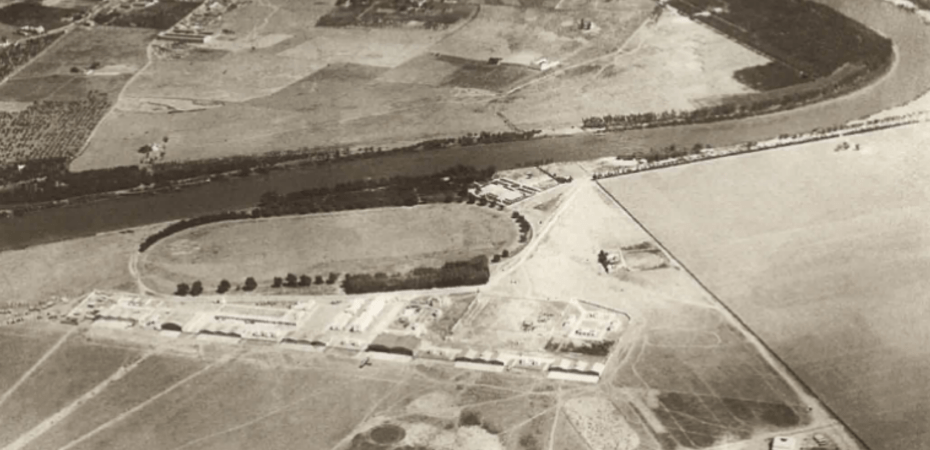
The site designated for the event was the Tablada Racecourse, where the Foot-ball pitch, measuring one hundred and twenty yards in length by fifty-five in width, was situated, and where the two goals or boxes were placed, measuring eight metres in length by three in height.
It was a sight to behold, once the game had begun, the daring, courage, serenity, lightness, etc., that each and every one of the combatants displayed in the struggle, with the most fraternal friendship and close comradeship reigning, despite the falls, shoves, blows from the ball, and all manner of incidents to which this exercise lends itself.
The deciding judge, the English Consul Mr. Johnston, understanding the lateness of the hour on the one hand, and on the other, that two periods had already been completed without either of the two sides having won—that is to say, having succeeded in sending the ball beneath the goals—declared the competition at an end. The game ended in a draw.
At eight o’clock in the evening, they all gathered for dinner at the Hotel de Paris, where the most cordial cheer reigned, and amidst the greatest joy, cheers were given for the Seville Club to attend the city of Huelva on the 14th of next February, with the aim of returning the visit paid to them today in our capital. —Salvador Lopez.
(As published in La Provincia)
