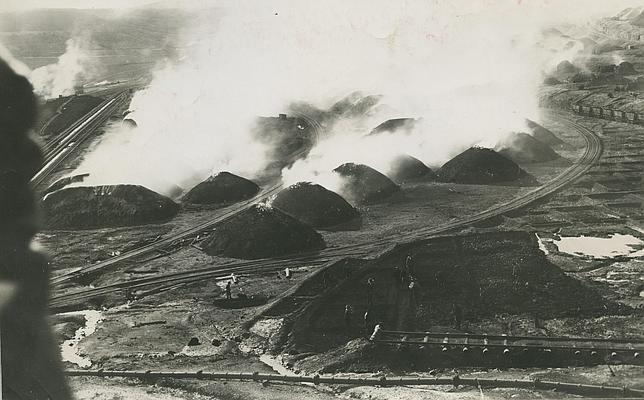
The decree of Mr. Albareda prospered, notwithstanding its errors and those of the Council of Health; and as the claims against that provision were many, the Government sent them all to the Council of State, which high body, understanding that the gravity of the matter rested upon the purification of whether the fumes were or were not noxious, fixed its attention principally upon the opinion of the Council of Health.
The Council of State declared that it was not confirmed, as was necessary, that the system of calcinations was prejudicial to public health. That is to say: in order to prohibit them, it was necessary to scientifically confirm their insalubrity. Since this had not been demonstrated, the Council of Health had said nothing of value, and the Government that prohibited the calcinations had committed an overstepping of its authority.
What did the Council of Health do in the face of this? Did it believe that the decree remained standing, when at this hour, with only the report of the Council of State, a tender and judicious Government should have already suspended the effects of said decree?
Seeing that the Council of State found nothing clear in the report of the Council of Health—or as the same opinion stated, that the Council was not “in the dark”—it opined that the learned and Royal Academy of Medicine should issue a verdict. The Government, conforming to this view, submitted several questions to the same Academy regarding whether the calcinations of sulphurous minerals were harmful to public health. The outcome is most ironic. The Government, which affirmed the insalubrity in a decree without adhering to any professional opinion, asks—when the damages of its measure have already begun to be felt—whether sulphurous emanations produce harm to health. We do not believe this procedure is used anywhere but in Spain, where, amidst great political liberties, there is no security in property, nor is the exercise of industries guaranteed, the Governments proceeding with a fixed criterion and as best seems to their will.
At the beginning of 1889, the Academy of Medicine began its study of the matter. While it was being discussed last year, not a single claim for death or illness was presented against the sulphurous emanations. There has been in this time not a single case, not one, of an ailment produced by the fumes. No certification has been issued; nor does any entry of death by calcinations appear in our civil registry; nor has any worker presented himself at any hospital requesting aid for a condition determined by the expressed cause. There have been some claims and vagaries, born of those interested in the harm of the mining companies; but, as we have already said, they have been vagaries for the purpose of deception, not for the justification of a fact that has never existed. On the contrary, what has occurred is that some residents, neither miners nor employees of the Companies, being unable to remain silent before the inventions being propagated, turned to the press to state that they were alive and healthy, and that they were ignorant of what consequences were supposedly befalling them. We recall now that a few days ago, in Nerva, no one had known any person ill as a consequence of the fumes.
In the scientific world, precisely in the last year, the most authoritative opinions have been issued regarding the health produced by the calcinations that exhale sulphurous acid. In an English work, translated in Paris last year, titled “Treatise on Pharmacology, etc.,” by T. Lander Brunton, we read the following: “Sulphurous acid, employed in inhalations, at times calms the pains of laryngeal phthisis.”
Messrs. Dujardin and Beal communicated to the Academy of Sciences in Paris the results of their investigations on disinfection by sulphurous acid, and their conclusions were that sulphurous acid, in its gaseous state, has a decisive action against vegetation and the germs contained in the air. This action manifests itself above all when the environment is saturated with water vapor. Sulfurous acid exerts action upon the germs of bacteria: employed in a pure state, it can, when its action is prolonged, destroy germs even in a dry state. The result of these investigations was reported by the scientific magazine “English Mechanic” in the month of May, 1889.
As is seen by these data, the so-called League against calcinations, which frequently parades the spectre of insalubrity against the mining enterprises, has certainly never informed itself regarding this point nor sought out other authorised scientific opinions without leaving Huelva. Among these is that of Mr. Cortazar, an engineer, who, in a lecture given at the Athenæum of Madrid, presented real observations in the mining zone of Huelva, where he lived for many years, and said regarding the “insalubrity” of the calcinations the following:
“In the different localities where pyrites are calcined in Europe and America, it has been observed that, the endemic diseases being less numerous than in the surrounding districts, no other special ones exist, such as where there are factories of lead, mercury, etc.
In England, Mr. Williams, the celebrated physician of Swansea, and several of his colleagues, affirm that the release of gases taking place in the mines is advantageous to them, producing a notable immunity in the operatives, and they even assert that since the installation of the copper industry, the pernicious fevers that reigned in the locality have disappeared. In Spain, statistics prove that the population in the central district of Huelva (that is, in which the mining industry exists) is very high. Does the percentage of deaths decrease and that of births increase, except where there are signs of endemic or infectious diseases?”
Professional reports, added Mr. Cortazar, certify that children are born without special diseases in these same districts; that children go to the teleras; that typhus and pernicious intermittent fevers are exceptional; and if there is any dominant illness, it is that which is found in every country where money abounds and where the floating population is numerous and cosmopolitan.
(As published in La Provincia)
