(As published in The Glasgow Herald)
MADRID, FEBRUARY 6 – Further intelligence regarding the disturbances at the Rio Tinto mines on the 4th just states that five persons who were wounded by the troops have since died. The authorities seized a large quantity of arms and a number of dynamite cartridges. The Governor of Huelva has issued a proclamation urging the miners to return to their work. Reinforcements have arrived at the mines from Seville
EVENING – The latest telegrams from the Rio Tinto district report that up to the present 13 bodies have been buried. It is now known that 12 persons were wounded, all of whom are reported to be miners and none foreigners. The majority of the men have resumed work, and complete tranquility now prevails in the vicinity of the mines.
This morning the men employed in the Rio Tinto Company’s workshops at Huelva attempted a strike, but, in view of the presence of the police, desisted and returned to their work.
(CENTRAL NEWS TELEGRAM) – Madrid, February 6. The well-known copper-mining district of Rio Tinto has been thrown into the utmost consfusion by a sanguinary struggle between soldiers and civilians arising out of a labour dispute. The English company which works the Rio Tinto mines decided the other day to reduce the wages of the miners, because the dense smoke produced by open-air calcinations interrupts work for two or three hours every day. The miners struck work in consequence, and entering into combination with the neighbouring peasantry, who are naturally annoyed by the foul fumes produced by open-air calcination, they parade the town and became riotous.
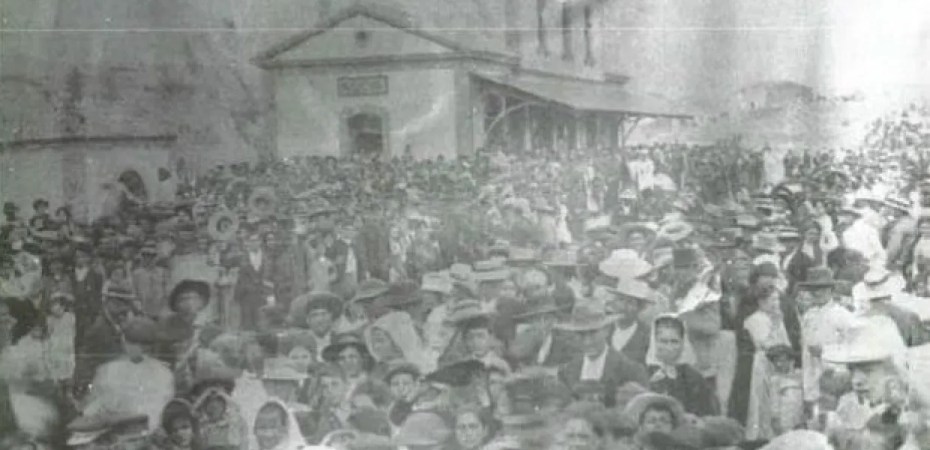
On Saturday the Civil Governor of Huelva was sent to Rio Tinto with a number of regular soldiers and civil guards. He addressed an assemblage of over 12,000 agitators from the Town Hall, and urged upon them the necessity and advisability of preserving order. Instead of yielding to this advice, however, some of the miners commenced to fire pistols and to explode dynamite cartridges. The soldiers were then ordered to fire. The crowd showed no inclination to shrink, and the contest proceeded furiously for a time, although the civilians had mush the worst of it, having 10 of their number killed outright and many others dangerously wounded, five of whom have since died. Of the soldiers only two are reported as having been seriously wounded.
The disproportion of the casualties is accounted for by the fact that at the outset the miners and peasants made a hot-headed rush upon the representatives of authority, and were shot down by the disciplined soldiers. Nevertheless, the rush was so well sustained that the troops were all but routed, and it was only coolness that gained them the day.
At last the rioters, thoroughly deprived of what little organisation they commenced with, retired to the outskirts of the town.
The authorities telegraphed for further reinforcements, and the town and surrounding villages are now occupied by about 1000 armed men, consisting of cavalry, infantry, and Civil Guards, under the command of the Brigadier-General. Magistrates have been sent to investigate the affair.
After the riots had been quelled on Saturday many houses were searched. In some were found arms and dynamite. The authorities also discovered that Socialist agents had been busy at work in fomenting the discontent of the people.
Holders of Rio Tinto shares will be glad to hear that the difficulty has been overcome, so far as the miners are concerned, by the English company promising, with the advice of the authorities, to restore the old scale of wages. Thus the copper market is not likely to be much affected.
