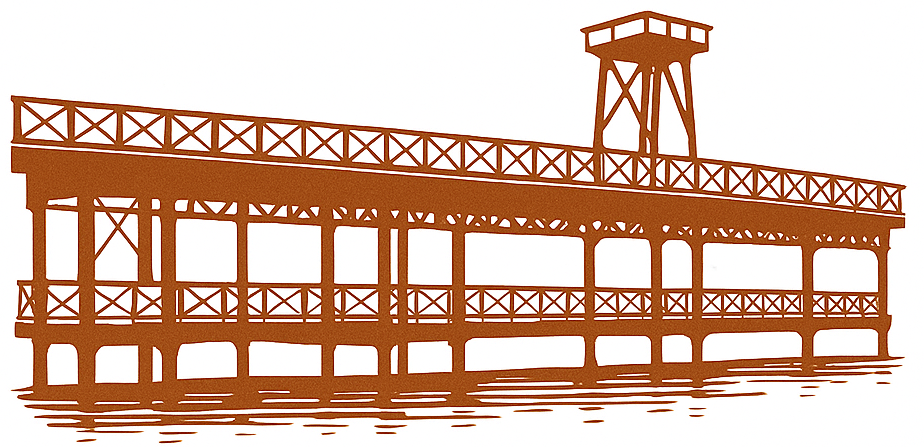
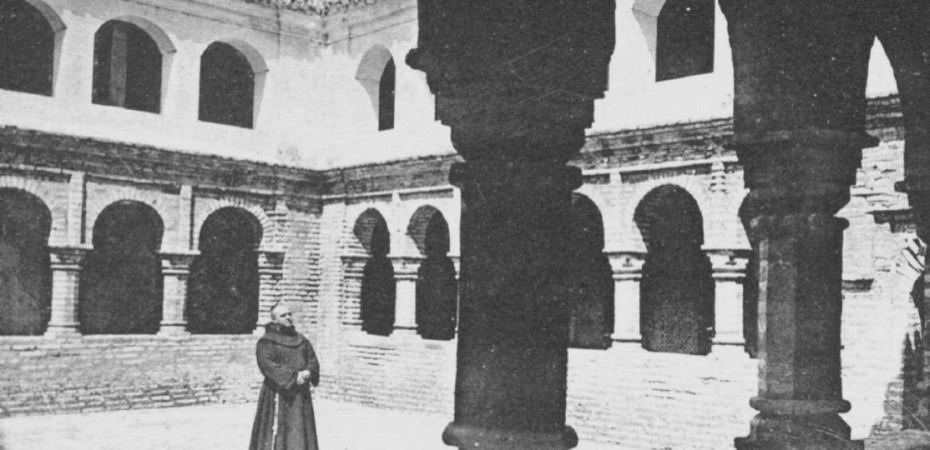
(The speech delivered by Sr. Guillermo Sundheim, Vice-president of the Sociedad Colombina Onubense, was recorded during the banquet held at the Hotel Colón on the evening of August 3, 1883, and published in the August 4th edition of La Provincia)
The Columbian Society, thanks to the effective cooperation of the Navy and of the most worthy authorities of the province, celebrates today once again the anniversary of the departure of Columbus from the port of Palos. Three hundred ninety-one years separate us from that auspicious day, nine short years from the fourth centenary. Public opinion is concentrating; it begins to be moved before that memorable date and from everywhere ideas and projects arise to celebrate the fourth centenary worthily.
Perhaps, gentlemen, as to me, the latest news will surprise you: according to the newspapers of Paris, Christopher Columbus is French by birth. Italy claims the honor of having been the cradle of Columbus and for what in the future may be convenient, its representative in the Court of Spain declines in very fine and diplomatic terms the honor of belonging to the Columbian Society of Huelva. Portugal has not yet found skillful terms to reclaim the glories of Columbus for itself; but there will be nothing strange in it doing so and certainly better reasons it will be able to adduce than Italy and France.
I set aside for now America whose titles to honor Columbus are of a different nature. The contest initiated honors the aforementioned nations, but I believe, gentlemen, that for the sake of success it is convenient to cut it short at once, placing the question in its true ground. Once the first nationality of Columbus is decided between France and Italy, [it is] welcome that one or the other or both at once celebrate the anniversaries of his birth; but as for the centenary of the discovery of the New World by Columbus, it only belongs to Spain to celebrate it as the cause, and to America as the effect.
Deceived in Portugal, his projects dismissed in Italy, only in Spain, gentlemen, between the Convent of La Rábida, Santa Fé of Granada, Palos, Moguer, Huelva and Cartaya did Columbus find souls, hearts, sublime intelligences of faith, courage and selflessness, indispensable conditions to realize the grandest deed that history is ever to record. Unforgettable names alongside Columbus: Isabella the Catholic, Friar Pérez de Marchena, Martín Alonso Pinzón….. history will engrave your names on a thousand pedestals of marble and of bronze; from the stone and from the metal time will be able to erase them, but it does not matter, for they will remain alive in the hearts of all future generations; they will remain alive as long as human beings are to exist on our planet.
In no way, gentlemen, were they Italians, French or Portuguese; those who manned the caravels, were Spaniards, they were sons of the province of Huelva, hearts of bronze, brave like no others; the money was Spanish and the one who commanded the fleet was Christopher Columbus, Great Admiral and ipso facto by the command of Spanish ships manned by Spaniards, he was Christopher Columbus, a naturalized Spaniard, according to common law and the common sense of all nations then as today.
Nothing matters to the history of humanity where Columbus was born, where he was raised nor where he lived; all the importance of his passage through this earth resides in the act of the discovery of America, carried out from a Spanish port, with Spanish money and with the exclusive help of Spaniards: to Spain, then, belongs exclusively the honor of the discovery of America and to Spain it is incumbent to render a splendid tribute to the memory of the immortal Christopher Columbus. To this end tend all the acts of the Columbian Society of Huelva formed three years ago to celebrate the anniversaries of the discovery and to prepare the fourth centenary.
On the 3rd of August Christopher Columbus set sail from the port of Palos. The fleet was composed of the “Santa María,” the “Niña” and of the “Pinta.” Who manned the boats? Were they perhaps Italians, French or Portuguese? What money paid the expenses of the expedition? Who, in short, commanded the fleet? At the same time that the efforts of the Columbian Society are directed to give honor to Spain by honoring Columbus dead, it also claims reward for the poor small province that knew how to give life to the gigantic enterprise; which lent sons who risked everything; their souls, their lives, their assets and their families to solve with Columbus the tremendous problem of the sea, dark in an era in which superstition intimidated even the most courageous.
Spain prepares itself to honor the memory of Columbus, and Spain has the duty to give a great testimony of gratitude to the province of Huelva. In the name of this province, in the name of the Columbian Society of Huelva and in the name of the descendants of that handful of heroes I claim, gentlemen, the ashes of Christopher Columbus, I claim of the Nation that it erect a mausoleum worthy of such a precious relic in the site where the soul of the immortal mariner found souls and hearts that understood him; in the Convent of Santa María de la Rábida. It is the debt of gratitude that the Spanish Nation owes to the province of Huelva.
Gentlemen, in the controversies entered into on various sides concerning the centenary of Columbus, this Society has seen with immense gratitude that its first protecting Member, with his deep penetration, clear talent and high aims has defended with warmth the preferential rights of the province of Huelva and as President of the Columbian Society of Huelva I have a special satisfaction to propose to you [that you] toast with me for H. M. King Don Alfonso and his Royal family.
