(Adapted from the article as published in La Provincia on 29th June, 1883)
Huelva, June 27. To the Director of La Andalucía.
I can say little—or rather, nothing—of Huelva itself in this letter; the few hours I have been here have been entirely spent admiring the magnificent Hotel Colón, a portentous wonder of modern architecture; a true monument, the pride of Andalusia, and the honour of Spain. This hotel will be the admiration and envy of all Europe, for it is a model of such establishments in modern times.
At the charming railway station, the expeditionaries were met by authorities and notable persons of the capital. Along the streets between the station and the hotel, a massive crowd gathered. It would be impossible to depict the admiration we felt during our first visit. I would struggle equally to provide a complete description of the refined artistic taste, elegance, and magnificence displayed in this sumptuous building, down to its most insignificant details.
The Grounds and Layout
The following notes will provide readers with a brief idea of what the powerful initiative of intelligent men, associated with capital, has managed to create.
- The Plot: A rectangular area of approximately 200 by 100 meters (two hectares), excluding the upper water reservoirs.
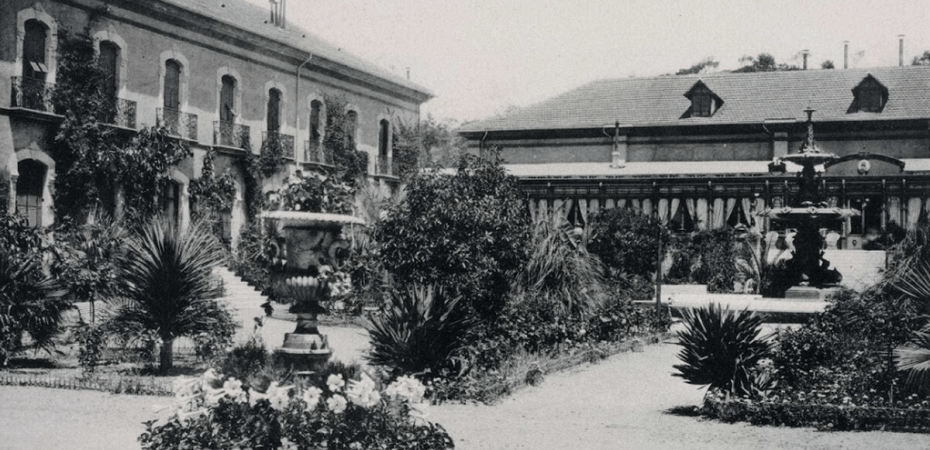
- The Configuration: Four main buildings enclosing a central garden (60m x 50m).
- The North Building: Contains the Dining Room, Restaurant, Billiard Rooms, Kitchens, and Cellars.
- The East & West Buildings: Dedicated to guest quarters, each containing 40 rooms that can be interconnected.
- The South Building: Contains 15 luxury suites (generally four rooms each), the Secretariat, and Management.
- Annexes: A machine house and water tanks to the north. A slaughterhouse, poultry farm, and dove-coats are located 1.5 km away, connected to the hotel via telephone.
Detailed Description of the Buildings
1. The North Building (The Great Dining Hall)
This is the heart of the hotel’s social life.
- Dimensions: 40 meters long, 12 meters wide, and 9 meters high.
- Lighting: 200 gas lights, 90 of which (the three main skylights) are ignited simultaneously by an electric discharge.
- Furnishings: Furniture by the Bembé firm of Mainz (old oak); gas fixtures by Krause of Mainz; chairs of Hamburg cane; and Saxon Royal Porcelain for the tables (capacity for 300 guests).
- Decoration: Renaissance style. It features two large German terracotta fireplaces with enamels alluding to the Discovery of America. The ceiling is decorated with circular shields depicting the three caravels: the Pinta, the Niña, and the Santa María.
- Orchestra Gallery: A large tribune for musicians is built into the north wall, designed with specific attention to acoustics.
2. The Restaurant and Leisure Areas
Adjacent to the dining hall is the Restaurant (12m x 12m), featuring English furniture and a black Belgian marble fireplace painted with an artistic view of La Rábida. Behind it are English and French billiard rooms, washrooms, and high-end sanitation facilities. A glass, iron, and marble Marquee runs along the south front, divided into five lounges: Ladies’ Lounge, Reading Room, Lobby, Gaming Room, and Smoking Room.
3. The Kitchens (The “Baulot” Installation)
The kitchens were installed by the Baulot firm of Paris. They feature a massive central range, two ovens, boilers, and a large rotisserie powered by a hot air current that regulates its own rotation. The department includes a dedicated coffee kitchen with its own bread oven and a telephone station to communicate with the rest of the buildings.
4. Guest Quarters (East and West)
These buildings are identical. Each has two floors with a central corridor. The rooms feature old oak wardrobes, English beds (noted for their solidity), and German wicker chairs. Each floor features fresh and saltwater baths (at any temperature), central cold and hot water fountains, and fire hydrants with 24 meters of pressure.
5. The South Building (The Luxury Suites)
An H-shaped building consisting of basements, two main floors, attics, and a tower. The suites include a parlour, bedroom, dressing room, bathroom, and private W.C.
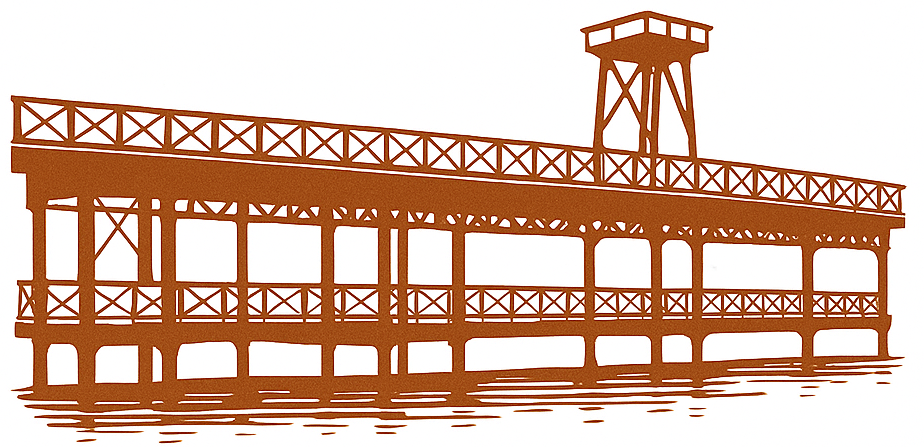
- The Tower: Accessible via a spiral staircase, it offers a breathtaking panoramic view of the entire landscape, including Moguer, Palos, La Rábida, the Bar, the Riotinto Pier, and the town of Huelva.
Modern Innovations and Gardens
- Gardens: The central garden features a fountain 9 meters in diameter with over 40 jets. There are extensive walks and grounds for cricket and bowling.
- Electricity: The exterior is lit by 12 Siemens arc lights and two Swan incandescent lamps.
- Water Supply: Water is brought in from Las Herrumbres. Although more expensive to transport, it was chosen for being the most healthful for consumption.
- Telephones: A network of six stations connects all parts of the complex.
- Construction: Works began in February 1882 under the direction of Mr. José Pérez Santamaría and the vision of Mr. Guillermo Sundheim.
The Inaugural Banquet
The banquet was an indescribable scene of animation and prestige.
- Presiding: Mr. Sundheim and Mr. Kranfort (Director of the Company).
- Distinguished Guests: Admiral Pinzón, the Military Governor of Huelva, the Governor of Seville (General Polavieja), Senator Vázquez López, and many other high-ranking officials from the military, judiciary, and government.
- Entertainment: The Hotel’s orchestra played throughout the dinner.
- The Atmosphere: One of “enthusiasm and joy,” as the guests recognised the significance of this improvement for Huelva’s future.
The Toasts:
- Mr. Sundheim toasted King Alfonso XII and the Royal Family. He followed this with an eloquent speech received with thunderous applause.
- The Marquis of Valdeiglesias and Mr. Escobar offered patriotic toasts.
- Mr. Comenge (of El Progreso) gave an ingenious speech toasting Spanish and Andalusian women, saying their beautiful eyes had “stolen the sun’s most brilliant light.”
- Mr. Jimeno de Lerma toasted the universal press.
At one in the morning, a special train returned guests to Seville, though many remained at the hotel to participate in upcoming excursions to La Rábida, Torre Umbría, and the Riotinto mines.
Your most affectionate, The Correspondent.
