(As published in La Provincia)
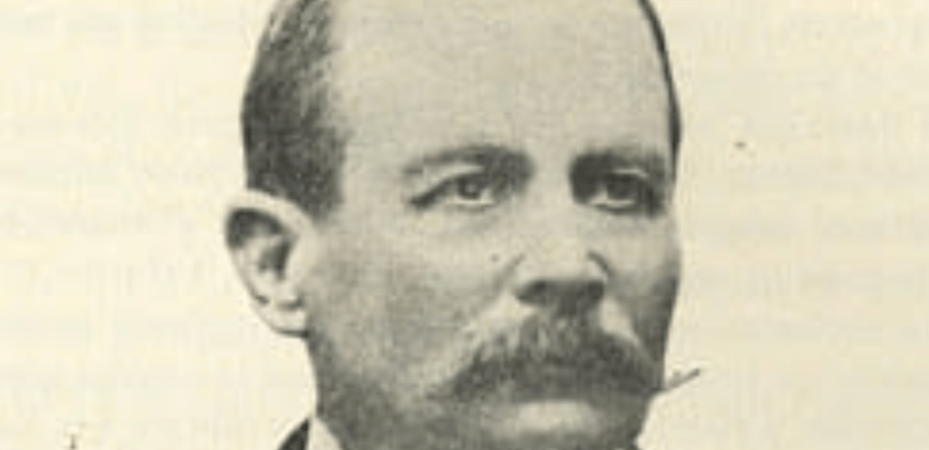
The Municipal Council of Huelva selected the 20th day of this month to honor Mr. Guillermo Sundheim with a celebratory serenade and the formal presentation of the diploma and decree proclaiming him an Adopted Son of Huelva. A distinguished commission of the Council—comprised of the Mayor-President, Don José Lopez Ortiz; the second Deputy Mayor, Don Pedro Garcia Jalon; and Councilmen Don Rafael de la Corte, Don Antonio Garcia Ramos, Don Juan Cornejo, Don Manuel Lopez Ortiz, and Don Enrique Pinto—carried out this auspicious act.
His Honor the Mayor, in brief yet poignant remarks, set forth the foundations of the Council’s resolution. He expressed the profound gratification he felt in manifesting the sentiments of gratitude held by this Corporation toward the man they have seen fit to name an Adopted Son of the capital, thereby interpreting the unanimous desire of the populace.
Mr. Sundheim replied to the Mayor with a discourse of great import, which we print below for the benefit of our readers and at the earnest request of those in attendance, who recognized the significance of its contents.
Gentlemen:
On a previous occasion, I conveyed to you the profound sentiments of gratitude inspired by the honor of being named an Adopted Son of Huelva. This appointment having been confirmed by the solemnity of this day, we find ourselves constituted as members of a single family; and, as befits a family gathering, I desire to offer some retrospective considerations while simultaneously addressing the prospects of our future.
The railway from Seville to Huelva is now brought to completion. Huelva and her province may justly boast of possessing a line which, in the solidity of its construction and the refinement of its architecture, remains unrivaled in Spain and may be favorably compared with the finest lines in the world ; we have spared no expense to ensure this work is worthy of one of the most significant provinces in the Spanish realm.
The construction society, composed of Messrs. Matheson & Co. and my own firm, does not seek, nor shall it ever seek, to prosper at the expense of others. If we gain, the nation gains much; and should we profit from new enterprises, it shall ever be but a modest portion of the many millions that have been, and shall be, distributed throughout this province by our initiative and mediation. I allude to this to confront a sentiment that has caused, and continues to cause, grave injury to this country: emulation—not that noble rivalry which strives to produce beneficial results—that, I applaud and wish to see on every scale, for it is a cornerstone of general prosperity—but rather that which is born of a petty heart.
The line from Seville to Huelva has finally entered its operational state. Huelva, with her magnificent harbor, now stands as the head of a vast railway network. The line she already possesses; the harbor nature has bestowed upon her. Shall Huelva become a great center of trade and industry, or shall she resign herself to being merely a port of transit?. In this world, there are exceptions to every case, but as a general rule, every man reaps what he sows ; and in the present instance, it may be asserted, without the slightest exaggeration, that Huelva shall be whatever the people of Huelva wish her to be, for better or for ill.
Nature has provided us with a magnificent port; our mines yield sulfur, copper, iron, and manganese in abundance, with known deposits of lead, silver, and other metals ; the sea offers the industry limitless quantities of salt and a bountiful catch. Agriculture provides oranges and diverse fruits of incomparable quality for the export trade; and, should the grape musts be treated with greater care, the production of wine alone would form the basis of a vast export commerce. Few populations in Spain shall have at their disposal a cheaper source of fuel than Huelva; thus, all industries established here may compete advantageously with the majority of other industrial centers.
Our geographical and climatic situation marks Huelva as a seaside resort for the summer and a residence for the infirm in winter. I believe it difficult to find a region in the entire world that encompasses such a diversity of positive riches as the province of Huelva; but, to make them of value, it is necessary to work—and to work hard. Capital is scarce here and credit non-existent—impediments that shall be remedied by banks and cooperative societies. I myself had not studied as an engineer, nor did I possess five thousand duros of my own when, at the age of twenty-two, I first came to this land. I have traveled, and in traveling, one always learns; by the law and innate tendency of progress, one seeks to apply improvements where one fixes his residence.
Thus was born the conception of the Seville railway. When I return to my birthplace, I observe with great pleasure the immense progress being made—progress due in large part to the companions of my youth. Some went to the Indies, others to Japan, and the majority to America; upon their return, they utilized for the benefit of themselves and their native town their savings, their worldly experiences, and the connections they had acquired.
Such a path was the foundation of the mercantile wealth of Venice and Genoa, as it is today of Hamburg, Bremen, Rotterdam, Antwerp, Santander, Barcelona, Marseilles, and all significant industrial and merchant cities. To foster education in the schools, to instill a desire to travel and learn, and a love for labor—this is one of the high missions to be fulfilled by the City Council of Huelva. In ten years, this city shall count upon a generation of instructed and ambitious youth who, in honorable competition with the foreign element, shall contribute to placing Huelva at the height which, by her conditions, corresponds to her above all rivals.
And while the parents of Huelva attend to the instruction of their children, encouraging them to seek knowledge and connections in Catalan or English workshops, or in distant lands, we here, each according to his strength, must pursue our part of the common labor. To the Council of Huelva falls great work and grave responsibility, especially regarding the matter of public health; for upon this depends largely whether Huelva shall become a seaside resort of importance or not. The question of public health is intimately linked with the projected works of the Port ; the great efforts made by the Board and its popular President for their construction—which shall be the completion of Huelva’s maritime importance—deserve not only applause, but the active and incessant cooperation of the entire provincial deputation, the city council, the agricultural board, deputies, senators, and private citizens, to obtain from the government those resources which in justice belong to the Province.
On another front, a matter is being stirred which holds transcendental results for the future of Huelva—a matter much ventilated lately by friends and foes in the local press: I refer to the projected railway from Huelva to Extremadura. The law authorizes two routes: one from Huelva to Zafra, and another, an extension of the Buitrón line, to a point on the Mérida-Seville line. I believe a line from Zafra to Huelva, supported by the mines of the Odiel basin, is a solution that, while developing the greater part of the province’s mineral wealth—today almost inaccessible—must correspond financially to the confidence that an enterprise of this nature should inspire in the capitalists whose support must be sought. The construction of the line as a separate business may yield profit or loss—this is impossible to foresee and will depend on circumstances difficult to analyze; the auction of the concession by law will be subject to the results of the public tender.
I have, therefore, no immediate personal interest in the eventual profits that the construction of that line might produce for me; I own no house, property, nor mine in operation in that region (subsequent registries are a different matter). Nothing, then, guides me in the choice of route but common sense, the knowledge of the true interests of the Province, and the responsibility that later might weigh upon my good name in the eyes of the inhabitants of the Province and the capitalists who, trusting in my word, are to help me carry out the enterprise. These considerations determined the choice of a route which has earned the full approval of impartial men in this Province and Estremadura. Upon presenting the project to the Government and making the deposit, I was surprised by a protest and the ensuing struggle, which it is useless to recount here.
In choosing my route, in forming my project, I never for a moment sought to hinder the progress of Mr. Bull, who with such success and by the law, had every right and a clear path to seek the extension of the Buitrón line to a point on the Mérida-Seville line. As this could little damage the traffic of the direct Zafra-Huelva line, on the contrary, I should have been glad to see a second line from Estremadura, which at the very least would have increased the value and merit of our lands situated today upon the Rio Tinto and Seville lines. Yet I find it difficult to explain the attitude of that gentleman and his protectors, who seek to annul my route to Zafra and Portugal and to merge the dual idea of the law into a single railway from Zafra to Huelva, passing through the Rio Tinto mines and ending at San Juan del Puerto.
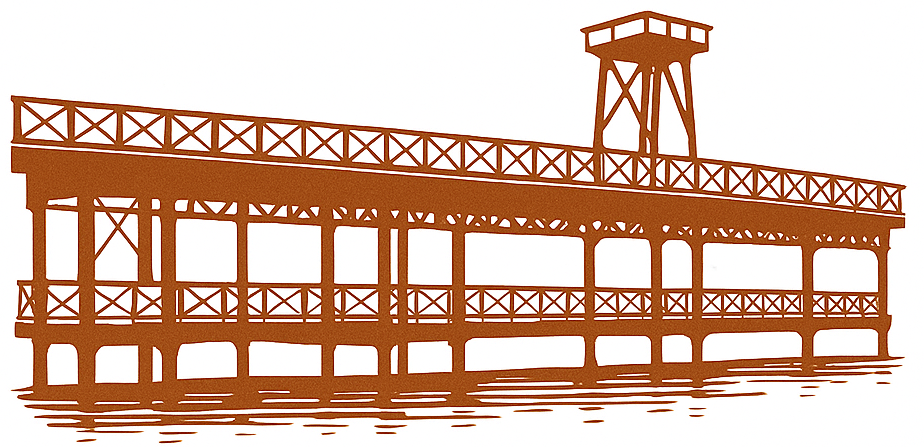
This would be a sterile route for the interests of the province of Huelva, and sterile for the port ; it would render superfluous the greater part of the Port Board’s works, for the shipments from Estremadura that I wish could come to Huelva would perforce have to embark from the Rio Tinto pier, the M.Z.A. company being bound to this by a solemn contract lasting 25 years—the eventual duration of the existence of those of us present. If, in view of the arrangement we made in our time with the “Lamiable” Company, a line is sought for Mr. Bull that is to save the Buitrón mining line from death, I can certainly assure you that he is greatly mistaken; for in the present case, not only are the passages very different, but principally I would not lend myself to a combination that would bring in its wake a general discredit, both for myself and for the general interests of both provinces.
But it is to be deplored, the path chosen and advised to Mr. Bull; for just as the struggle over the Seville line delayed the work for many years, so the current struggle might deprive the province for many years of the benefit of the route to Estremadura. I have not attacked, nor thought of attacking; I shall defend myself, and with it the true interests of the province, and let each man bear his own responsibility.
And now, gentlemen, I repeat what on the affectionate gathering of March 15th was done by Messrs. Doetsch, Carrillo, and myself, toasting cordially to the prosperity of Huelva, for which the three of us work united. In their name and mine, I do so again here, adding a toast for the City Council that has honored me so greatly, declaring me an Adopted Son of this capital.
This agreeable gathering concluded at three o’clock in the morning, with all present departing amidst well-wishes for a speedy reunion at the inauguration of the Estremadura railway works.
