(Glasgow Herald—July 16, 1873)
We are requested by the Secretary of the Tharsis Sulphur and Copper Company to publish the following statement:—
The Tharsis Sulphur and Copper Company (Limited), 136 West George Street, Glasgow, 15th July 1873.
Sir,—As the Tharsis Company is being made to stand “sponsor” for so many new schemes, it is considered proper that I send you, as one of our shareholders, the few following remarks:—
You have no doubt been favoured with a copy of a prospectus of the “Rio Tinto Company (Limited)”, which is proposed to be formed for the purpose of acquiring and working the cupriferous mines of that name in the district of Huelva, in Spain, and, as its claims to public interest are mainly based on the success of the Tharsis Company, it may not be uninteresting nor unimportant to inquire in what respects any comparison can be made between these two companies.
I.—Capital
The price payable to the Spanish Government for the Rio Tinto Mines is stated to be about £3,850,000, payable by equal instalments in ten years, and provision is proposed to be made for the first three years’ expenditure as follows:—
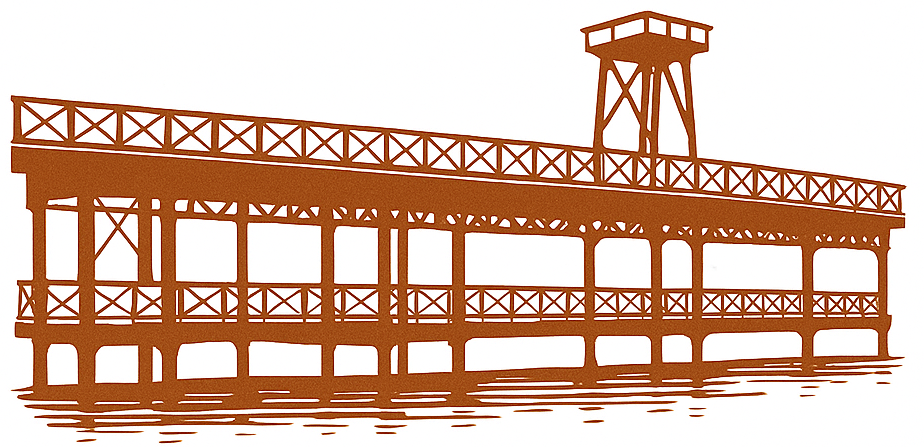
Three annual instalments of purchase price, and amount of the valuations,… £3,850,000 Construction and equipment of the railway tunnel, and pier at Huelva,… £775,000 Mining plant, new works and the removal of the overburden,… £200,000 Current expenses and contingencies,… £80,000 Cash to original purchasers,… £150,000 Amount required to pay interest on bonds during construction, less receipts from copper sold,… £350,000 £2,757,000 Supposing the estimates now made for the expenditure on such an undertaking not to be exceeded, which, judging from experience, is most unlikely, the above will be the expenditure on capital amount, after absorbing all expected profits at the end of the third year. But in addition to this expenditure the company will be under obligation for the following amounts:— Debentures bearing 8 per cent. interest to be granted to the original vendors in addition to the £150,000 in cash,… £600,000 Balance of purchase price to the Spanish government, about… £2,695,000 Total £6,032,000 The capital of the Tharsis Company is:— Debentures,… £100,000 Ordinary shares,… £900,000 Total £1,000,000
For which they possess the mines of Tharsis and Calañas, and 21,000 acres of land under lease for 88 years ; a railway to the shipping port completely equipped ; shipping piers, and 1600 acres of land at Huelva ; extensive works and plant at the mines ; and seven larger copper works in Great Britain, all in active operation. The present issue of capital for the “Rio Tinto Company” is only £2,000,000, but the subscribers will do well to bear in mind that on them will fall the onus of providing all future capital required to complete the purchase and full development of this gigantic undertaking at the rist of the value of their present subscriptions.
II.—Revenue
The estimate of the quantities of ore which the proposed company “will be enabled to quarry and deliver in the English, Continental, and other markets is 500,000 tons of ore per annum” They further estimate a profit of £60,000 from production of copper on the spot, which requires a further output of 200,000 tons, being a total extraction of 700,000 tons. This is on the assumption that an output of such unprecedented quantity can be quarried, and that the whole of the ore taken out will be of nearly equal value, and average 48% sulphur and 2½ to 3½ per cent. of copper. But as 700,000 tons will require an extraction of 2,500 tons per working day all the year round, many years will elapse before this can be accomplished, if ever ; and it is believed that the ore does not contain even 2½ per cent. of copper on the average. The experience of the Tharsis Company gives 2 to 2½ per cent. upon their total output. In the treatment of anything like 200,000 tons at the mines, 4,700 acres of land will be found totally inadequate for protection from claims for damages caused by the diffusion of the sulphur fumes and no provision of capital seems to be made for the necessitated removal of the town of Rio Tinto to the new site marked for it on the plan accompanying the prospectus. With regard to the marked for this large production, it is assumed that all will be absorbed at something like the existing prices. Now, although the demand for pyrites has been increasing at a very rapid rate, the total import from all sources to Great Britain only amounted in 1872 to 515,299 tons, and unless the increase go beyond any moderate calculation, the present sources of supply will be more than the requirements of the trade. The Tharsis Company, it is stated, is burdened with a royalty of 4s 3d per ton of ore expreted and 2s 3d on ore worked at the mines. The true royalty is 3s 8d in the ore case and 1s 10d in the other. The Rio Tinto Mines, although free of royalty, are from the commencement burdened, by bonus to the vendors, with the following—
| £150,000 cash, say at 6 per cent., | £9,000 |
| 600,000 debentures, at 8 per cent., | 48,000 |
| £57,000 per annum. |
which is equal to a royalty of 4s 6d per ton on 250,000 tons of ore. Even the Tharsis company, with every desire and the most advantageous relations with the consumers, have never been able to effect a larger sale than 240,000 tons in any one year. Moreover, this £57,000 is a fixed burden payable irrespective of output, and ever if output from any cause should be interrupted or deficient. The costs of production and values in this country are certainly not warranted by any experience of the Tharsis Company, notwithstanding the advantages they enjoy of being twenty miles nearer the seaboard, and having constructed their works when iron and other materials were only about tone half, and wages very considerably less, than they are at present. The burdening of the company by a perpetual charge of 1 per cent. on sales and 2½ per cent. of purchases is an unusual one, and one from which the Tharsis Company is free.—Yours Faithfully, Jonathan Thomson, Secretary.
