
(New York Times, May 31.)
ONE of the saddest things about the errors or extravagances of a good cause is, that they inflict irreparable injury on the cause itself. In Europe, for many years to come, the crimes of the Parisian socialistic democracy will be charged upon liberty, and the first demands of the labouring classes and the cities of the Continent will be confused with the wild ideas and savage crimes of the French Communists. If the excesses of the socialistic workmen in Paris produce such a profound impression of horror and disgust here, we can imagine what the sentiment of the middle and intelligent classes of Europe must be concerning these crimes. Everything tends to make these excesses appalling and hideous to the world. The outbreak of the labouring classes was not against a tyranny in the flush of its power. It was not, like the revolution of ’98, an explosion of the masses against the abuses and wrongs of centuries, inflicted by the powerful. The Government which was attacked so fiercely was the choice of the people; it was, at least nominally, a Republic. The moment chosen was when the country lay bleeding and prostrate beneath a foreign invader, whom these very labourers had not the courage to attack. The authorities whom the masses thus attempted to overthrow were themselves weakened by their long struggles with the public enemy.
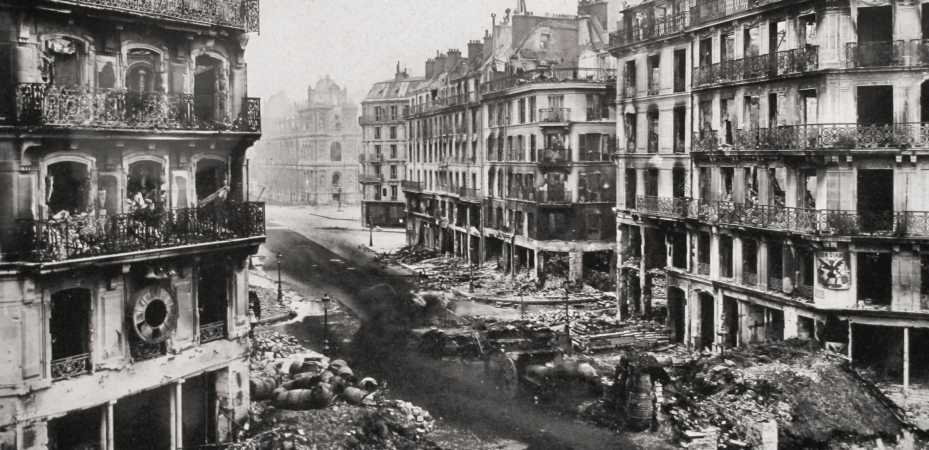
As if to defy the peculiar and most cherished sentiments of France and Europe, the war-governing power in Paris declared war, not only against their bleeding country, but against art, property, and religion—against civilisation itself. For a time, the world was favoured with a spectacle of a city governed by its day-labourers and “classes dangerenses.” They heard property declared They heard property declared a robbery, religion a superstition, and the arts a memorial of barbarism. The ancient monuments of glory were overthrown; churches sacked and desecrated; the obligations of business declared broken ; marriage made a contract at pleasure ; and the ministers of religion banished or murdered. To crown all, the working men in their defeat attempted to destroy the city they could not govern; and, with the riff-raff of all nations and both sexes who gather in the slums of a great city, they defaced and burned works of immortal genius, and ruined and demolished what no wealth or culture can ever restore. They die at last, amidst the blackened and blood-stained ruins of the capital they professed to desire to free from the control of their countrymen.
Now, such horrors and crimes as these put back the cause the Parisian labourers had at heart, at least half a century. The very name of “working men’s organisations,” “associations,” and “unions,” will smell in the nostrils of Europe for generations. It is undoubtedly true that the labouring classes of Europe have not had their fair share of the blessings of life. The rich and the capitalists have used their labour for centuries, and have taken an undue proportion of the profits. They have a fair claim to more than they now get of the world’s good things. They were, through universal suffrage, and, above all, through international trades unions, beginning to obtain more of their just rights. But suddenly there comes a blow upon them from the house of their friends. “What the labouring class will do with their power, when they get it, is shown in Paris!” will be the ready objection to every new privilege they claim. “The French oucriers prove what trades unions and working men’s associations lead to!” Such will be the feeling of Europe at any proposed political elevation of the working class, or at the prospect of greater power in the trades associations.
