REPORT BY THE DIRECTORS (April 12, 1871)
REPORT BY THE DIRECTORS OF THE Tharsis Sulphur & Copper Co. (LIMITED,) TO THE FIFTH ORDINARY GENERAL MEETING OF SHAREHOLDERS, APPOINTED TO BE HELD WITHIN THE HALL of the CHAMBER of COMMERCE, VIRGINIA STREET, GLASGOW, ON WEDNESDAY, 26TH APRIL, 1871, AT ONE O’CLOCK AFTERNOON.
BOARD OF DIRECTORS. CHARLES TENNANT, Esq. The Glen. ARCHIBALD S. SCHAW, Esq. Glasgow. HENRY DEACON, Esq. Widnes. ALEXANDER HARVEY, Esq. Glasgow. LOUIS LEISLER, Esq. Glasgow. JOHN MOFFAT, Esq. Ardrossan. ARCHIBALD ARROL, Esq. Glasgow. DAVID WILSON, Esq. Glasgow. JOHN WILLIAMSON, Esq. South Shields. DAVID GAMBLE, Esq. St. Helens. JOHN TENNANT, Esq. St. Rollox.
CHARLES TENNANT, ESQ. CHAIRMAN. WM. A. VÉREL, MANAGER. | JONATHAN THOMSON, SECY.
REPORT BY THE DIRECTORS. THE close of another year affords us the opportunity of placing before you a statement of our affairs.
From the outbreak of war between two of the principal Powers in Europe, Copper was prejudicially affected, and fell, from the price attained in June, £6 per ton. In October it touched the lowest point on record. From that date to the close of the year it gradually rallied, until, in the last week of December, it again rose to the price with which the year had opened. Iron has slightly receded, while Sulphur has remained stationary.
The quantity of Mineral extracted during the past year at Tharsis and Calanas is 309,866 tons. Of this, 148,776 tons have been shipped, the remainder has been used in the production of Copper on the Mines, or is still in stock. The quantity shipped is still slightly in arrear of our minimum export, and will increase the balance of the Royalty Account to a small extent, but we shall now begin to reduce this asset. Our actual imports and deliveries to the close of the year amount to 132,230 tons, the difference being either afloat or in stock at the shipping port.
The production of Copper on the Mines has amounted to 2,204 tons, while that of our various metal works in this country has reached 3,853 tons.
In the valuation of the stocks, and in dealing with the depreciations for the works in this country, the principles adopted last year have been followed throughout. The Copper sold by the different metal works has been charged with £5 per ton, and the amount carried to the credit of “Patent Rights Account.”
It has been deemed advisable to write off the balances outstanding at the debit of “Experiments” and “Preliminary Expenses Accounts.” “The Mines Lease” and “Cinder Rights and General Bonus Accounts” have also been further reduced.
In consequence of a violent storm, a large reservoir, from which the Mines are partly supplied with fresh water, gave way. This accident was unhappily attended with the loss of several lives. The damage done to the Works has been debited to the Revenue of the year.
The amount at the Credit of Railway Sinking Fund has been increased to £14,322: 6s. by the excess of Revenue over Working Costs, and provision has also been made for the renewal of Rolling Stock, to the extent of £1,500.
These, and some other less important items, have all been written off the profits of this year. We refer you to the Balance Sheet for the details.
The Capital absorbed by permanent Works during the year, including the Railway and Pier, amounts to £45,897: 15s. 5d. A further sum of £15,315: 13s. 8d. has been spent in the removal of over-burden; of this the mineral removed has refunded £11,351: 14s. 5d. leaving £3,963: 19s. 3d., which goes to increase this asset. The large extraction, now indispensable, demands that the mineral should be well uncovered, so as to admit of a large surface being attacked at once.
The net profits earned during the year amount to £94,571: 17s. 6d. An interim dividend of 5 per cent. was paid in November last, we now propose to pay, on the 10th of May next, a further dividend of 5 per cent., also free of Income-Tax, after which there shall be carried forward to next account a balance of £27,206: 15s. 5d.
As announced to you in November last, the Arbitrator in the case with the Railway Contractor allowed him a sum of £26,457: 4s. 3d. in payment of his claim of £123,941: 2s. 4d. In consequence of a Chancery suit, raised against him by two parties who had given important evidence in the case, we were advised to delay accepting the verdict until the end of January, by which time nothing of sufficient importance had appeared to warrant an attempt on our part to have it set aside. For this reason the amount awarded does not appear in our accounts at 31st December last, but will do so in the next, the amount having now been paid. The Railway is doing its work well. The increased traffic to be overtaken during the present year will necessitate the addition of another locomotive and of some waggons to the Rolling Stock.
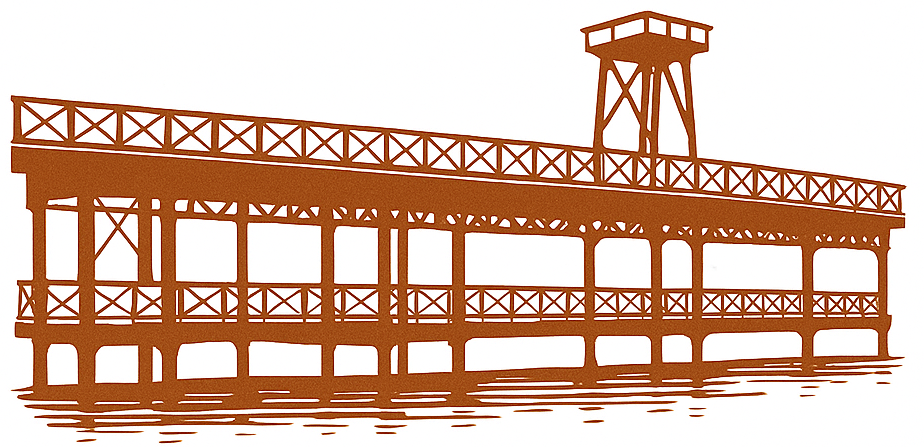
The Pier, like most similar works, has proved more tedious to construct than we anticipated in our last year’s Report. It is a substantial erection, and will effect a considerable saving in our expenditure. Nearly all the piles are in their places, and by the end of next month we expect to have it in operation. With this, all our heavy works of construction will be at an end; they have occupied much time and attention, which we shall now be able to devote to the development of the Company’s resources.
The retiring Directors are Messrs. CHARLES TENNANT, ARCHIBALD S. SCHAW, and HENRY DEACON, who are eligible for re-election. A seat at the Board now remains vacant, which it is left to the Shareholders to fill up.
The Auditors also retire at this Meeting, but are eligible for re-election.
BY ORDER OF THE DIRECTORS, CHARLES TENNANT, Chairman.
——————————————————————————–
REPORT OF THE PROCEEDINGS (April 26, 1871)
REPORT OF THE PROCEEDINGS OF THE FIFTH ORDINARY GENERAL MEETING OF THE THARSIS SULPHUR AND COPPER CO. (LIMITED), HELD WITHIN THE HALL OF THE CHAMBER OF COMMERCE, 66 VIRGINIA STREET, GLASGOW, On WEDNESDAY, 26th APRIL, 1871.
The Fifth Annual Ordinary General Meeting of the Tharsis Sulphur and Copper Company (Limited) was held within the Hall of the Chamber of Commerce, No. 66 Virginia Street, Glasgow, on Wednesday, the 26th day of April, 1871, at One o’Clock P.M.
CHARLES TENNANT, Esq. of The Glen, Chairman of the Board of Directors, took the Chair.
There was an influential attendance of Shareholders—140 being present, holding or representing £825,430 of the issued Capital of the Company.
There were laid on the Table, Proxies in favour of the Directors from 267 Shareholders, representing 67,561 Shares; and Proxies in favour of Mr. William Henderson from 25 Shareholders, representing 1,926 Shares.
The CHAIRMAN rose and said, We shall now proceed to the business of the Meeting. Mr. Thomson will read the notice calling the Meeting.
MR. THOMSON having read the notice in question, The CHAIRMAN said,—Gentlemen, our Report has been in your hands for some eight or ten days, and I have no doubt it has been perused by all the shareholders. With your consent, therefore, we shall hold it as read, and I proceed at once to move its adoption. (Agreed.)
The result of the Company’s operations for the past year has been better than your Directors anticipated; and this is all the more satisfactory that it is due, not to any increase in the prices obtained by us for sulphur or copper (these being, on the contrary, 5d. per ton for sulphur, and £4, 5s. for copper, less than in 1869, while the price of iron ore remained absolutely, or as nearly as possible, the same), but is solely owing to improved and extended working in all branches of our undertaking. (Applause.)
The total extraction at Tharsis has been 287,000 tons, against 187,000 tons in 1869; and the Precipitate produced has been 3,390 tons, as against 2,989 tons in 1869. This increased output and production have involved an increase of labour; and as we have to provide accommodation for all the people on the Mine, we have had to add considerably to our houses. We have built two groups—forty for our workmen, and four of a better class for foremen. We have further greatly improved the internal and service roads of the Mine, while in the old village the streets have been levelled, and considerable expense incurred. The work of the Mine tends more and more to the use of Locomotives, and to the replacing of our old and narrow gauge roads, light rails, and small waggons, by broader guages, heavier rails, and larger waggons. Fortunately we have been able to utilize for this purpose the Griffin rails, which, as you are aware, we have been obliged to do away with on our main line of Railway. These Griffin rails suit the Mine traffic perfectly, and have thus saved us a considerable outlay. We have constructed, further, a large shed for the repair of our waggons, and the storing of our timber, which was much wanted. A foundry also has been constructed, enabling us to cast our small waggon-wheels and the brasses of daily requirement. Hitherto we have obtained these from Seville; and the saving now effected has been between 30 and 40 per cent. To our tools we have also considerably added; and our Manager reports that our workshops are now complete, and will give no occasion for fresh expenditure. An engine and an incline have been erected from the Tanks to the Barbasco or Waste Heap, the work having formerly been done by mules; and these, together with the re-building of the Reservoir, which so calamitously gave way, are amongst the principal causes of the large addition which has been made this year to our first Spanish asset in the balance sheet—namely, “Works, buildings, machinery, and plant in Spain.” This asset stands now at £56,102, 3s. 3d., against £47,418, 2s. 1d. in 1869, showing an increase of £8,684 1s. 2d.
The next account I will look at consists of your Stocks-in-trade in Spain, comprising pyrites, copper, and precipitate, waste-heaps and smalls, and stores of various kinds. They show also a considerable increase in your balance sheet, standing now at £154,024, 1s. 11d., against £139,138, 3s. 8d. in 1869, an addition of £14,885, 18s. 3d. You will see, by reference to your last balance sheet, that we therein put aside a sum of £6,195, 15s. 4d. to depreciate these two Spanish assets. Your auditors were of opinion that instead of this amount being allowed to stand at the credit of a depreciation account, it should be written off direct—which you will observe has been done. They also advised that the value of your plant account in Spain should be further reduced this year by a sum of £3,000. On reviewing the items which constitute this asset, your Directors concurred, and this has been carried out.
Notwithstanding these considerable depreciations, the amounts standing at the debit of these assets have increased, as I have said—the first by £8,684, 1s. 2d., and the second by £14,885, 18s. 3d., together, £23,569, 19s. 5d.
The next Spanish asset to which I will allude is your Railway. A considerable outlay has been made on it for improvement of the road, widening the embankments, and additions to rolling stock, which would have increased the amount standing at its debit, but for the fact that we have been able to utilize, and therefore to credit it with, the value of the material of the Griffin system, part being used, as I have said, on our mine railroads, and part for precipitation purposes in our tanks, where it has served fully as well as the pig iron we send out. The result is an addition to the asset of your railway of only £239, 0s. 4d. The line and plant are in good order, and do their work well. The cost of carriage has been higher than we like, or than we anticipated; but it is, I am glad to say, in course of reduction. It was 2s. 9d. per ton for the year, showing a profit of 2s. 3d. per ton on the rate of 5s., which we charge on our mineral. This, on 161,000 tons carried—namely, 148,500 tons down, and 12,500 tons up—gives a profit of £18,213, 19s. 6d.; from which falls to be deducted £7,500 interest on our debentures, leaving us a sum of £10,713, 19s. 6d., which we appropriate thus: £9,213, 19s. 6d. to Railway sinking fund account, and £1,500 to our Rolling stock renewal fund—a new account which we have deemed it right to open. Our Railway sinking fund is further increased by a sum of £147, 7s. 4d., amount of Government bonds paid off, and which reduces to that extent the sum standing at the credit of our Railway subsidy account.
Some of our shareholders may perhaps think—and I know one of them, and a large one, who is of this opinion—that it would have been better to have written off the £14,322, 6s. now standing at the credit of Railway sinking fund, and thus reduce the amount of £231,360, 15s. at which your Railway stands in your balance sheet; but, as you may be aware, we have to renew or pay off our debentures two years from this time, and we think we shall be in a better position to do so if we can show a considerable sum of money put aside for that purpose. Moreover, the railway is giving us a good return on the capital invested in it, and, with the larger traffic flowing over it, will show more favourably this year.
I now come to the Pier, the next asset in your balance sheet. The pier, I am sorry to say, is not yet completed; but we expect every day to hear that the last piles of the pier-head have been driven. We have no reason to entertain any doubt about this. Unfortunately, we did not tell them to send us a telegraphic message, which perhaps we ought to have done in view of this meeting; but we have reason to believe that the two or three last piles have been driven. The two steam cranes are now in course of erection, and we trust this very important work will be available for our purposes in the course of the next six weeks. The delay, as you may suppose, has been very annoying and disappointing to us.
The next asset in your balance sheet consists of the shares in St. Telmo Mine. The position of this asset I explained fully to you on the 27th of April last; and there is nothing now further to report with regard to it, except that there has been a General Meeting of the Shareholders held at Seville, at which we were represented by our legal adviser, Mr. Monsalve. The low price of copper—for you will remember that this mine is purely copper-producing—has rendered its operations unprofitable, and they are suspended. The Meeting was adjourned till July of this year. Meantime we have instructed our Managers in Spain to visit this mine; and we shall be guided by their report as to what steps we should take towards improving the position of this asset.
Our Calanas Mine goes on steadily. The copper produced is 510 tons, against 452 last year. Thence we export copper, and not precipitate, as a good method for the carriage of the latter has not yet been found, although we are endeavouring to find such a method, and think we have now nearly succeeded. It would be very advantageous to the interests of this Company if our copper could be all brought home as precipitate. There is the diminution of cost of production on the mine, and also the marked diminution in the converting of it into refined copper in this country. Mr. Roupel, lately in charge of our precipitating works at Tharsis, has replaced our old Manager, Mr. de Garay, whom illness in his family forced to resign. We are making considerable improvements and additions here; and I trust we may shortly depend upon a minimum production of at least 50 tons of copper per month. As I said at our last Annual Meeting of Shareholders, this mine is a very valuable property, and we look forward hopefully to its future.
We now come to a large account, namely, the overburden account. I am sorry to say that it has slightly increased this year, as stated in the Directors’ Report. I will glance over its particulars. The mineral uncovered, calculated to the depth of 21 mètres, our railway level, was at the date of our entering into this property—namely, 1st December, 1866—232,532 tons; the quantity at the date of your balance sheet was 946,451 tons, leaving an addition of uncovered mineral, as compared with the date of our entry, of 713,919 tons. In addition to this, we have partially uncovered 541,312 tons. Adding these two totals together, we have in all 1,255,231 tons. The amount at the debit of the account is £47,006, 2s. 7d. If we add what is required wholly to uncover the 541,312 tons—namely, £11,500—we come to a total of £58,506, 2s. 7d., as against a total of uncovered mineral of 1,255,231 tons, which, at 5 reals per ton, the price we charge upon our mineral extracted, gives £66,065, leaving a surplus of £7,558, 17s. 5d., so that we may fairly consider this a good asset. But the shaft in our open cast being now down 22 mètres below the railway level (which is the line above which the mineral I have just been describing to you stands), and still in solid ore, we have really a very much larger quantity totally uncovered and unwatered. Mr. Down writes, that every mètre in depth represents 182,400 tons. Twenty-two mètres would therefore give us 4,012,800 tons; and thus we may say that we have some five and a half millions of tons uncovered and unwatered. When we are in full operation with our third stope, which we are now vigorously pushing on, we shall be able, I trust, to prevent any further considerable addition to this asset.
The next asset which you find in your balance sheet is the “Royalty paid on mineral yet to export.” This asset has, I am sorry to say, again somewhat increased, although not by a very large amount, £1,635, 1s. 7d., and stands now at £43,057, 10s. 8d. From this date the realization of this asset will begin, and go on, I trust, rapidly. Our sales for 1871, amount to 220,000 tons at 6d., 7d., and a small quantity, very little, at 8d.
You will, perhaps, allow me here to make a few remarks as to prices—our method of selling—and our buyers, about all which, I fear, very erroneous notions prevail. As to the first, I hold in my hand a statement of the prices paid by Charles Tennant & Co., St. Rollox, to Mr. James Mason, through his agent in Glasgow, Mr. Clavering, from 1860 to 1867, the date when the Tharsis Company appeared as sellers. From June, 1860, till January, 1862, Mr. Mason’s price for Sulphur was 30s. per ton. In January, 1862, he reduced the price to 25s. per ton; in August, to 22s. 6d.; in November, to 20s.; which continued till March, 1863. In April, 1863, he reduced the price to 17s. 6d. per ton, about 441d. per unit of sulphur. This price continued till January, 1865, when it was raised to 20s.
I have thus given you the prices from 1860 till 1865, the average of these years being 22s. 6d., or 521d. per unit.
In 1865 Mr. Mason adopted a different method of selling. He sold the pyrites on a basis of 2 per cent. of copper, and in July raised his price to 50s., equal to 30s. for sulphur, which continued till January, 1866. He then raised it to 35s., which continued till March, 1866, when he raised it to 65s, that is 45s. for the sulphur, and this continued till January, 1867. The Tharsis Company then began their importations; but the average of Mr. Mason’s prices to Messrs. Charles Tennant & Company, from January 1860 till 1867, was 27s. 221d., or rather under 7d. per unit. I will now state the prices obtained by the Tharsis Company since 1st January, 1867, till 31st December, 1870. We began at 821d., and we have come down to 6d., the average being 741d. per unit, or rather more than Mr. Mason obtained when he had the market pretty much to himself, or at least when we certainly had no influence over it. (Applause.) But the question of the price of pyrites, I need scarcely add, is like that of any other article—it is a question of supply and demand. To the extent of our imports, and to that only, do we influence prices. Last year the total import of pyrites into this country was 411,000 tons. Our share of that import was 132,000 tons, leaving 279,000 tons to Mr. Mason and others. As to our method of selling, the sales of both sulphur and copper are entirely entrusted to our Manager and Secretary. They have reliable correspondents in the various markets, and obtain the best prices those markets admit of; and I need hardly add that Mr. Vérel and Mr. Thomson do their business very well, and that your interests could not be in better hands. (Applause.)
As to customers, our sales of 220,000 tons for 1871 are to 56 consumers. Of these, four are members of this Board, and four are interested as shareholders. The four members of this Board have bought 56,000 tons; and the four Firms who are shareholders in this Company have bought 17,000 tons, leaving a total of 147,000 tons sold to forty-eight Firms who have no interest or holding in this Company. (Hear, hear, and applause.) I think, gentlemen, that I have reviewed very shortly all the Spanish assets; and I now come to the English assets.
First, as to the Metal Works, the amount of capital spent on these works during the year has been £21,933, chiefly on Garngad and Lancashire; but not entirely so, as there has been a portion of it also at Staffordshire and Tyne. By depreciation on the principle adopted at our balance of 1869—namely, 5 per cent. on the New or Garngad Works, and 721 per cent. on the Old Works, i, e., the others—we come to a figure of £8,770, which reduces the amount standing at the debit of Metal Works to £135,275, 15s. 6d., showing an addition to the Capital Account of our Metal Works for this year, as compared with 1869, of £13,162, 7s. 10d.
I am glad to be able to report favourably of the results for the past year from these works. They are the best results we have yet obtained, showing a diminution of cost, an improvement in quality of copper, and an increase of production. Willington also has given us an improved and a good return. The whole is due, in some degree, to extension, but chiefly to better management in all departments. (Applause.)
Having, as you are aware, works in Glasgow, Lancashire, Staffordshire, and on the Tyne, we can compare their weekly and monthly operations, and our technical Manager sees wherein one is doing better than another, and takes such steps as he may think fit to remedy the shortcomings, and to assimilate all to the highest standard. This, you will see at once, is a very great advantage, which no other Metal Extracting Company possesses. Your Directors are well satisfied with the way in which this department works. Improvement and economy have told on the results, and I believe will continue to do so. As to the details of cost and profit on your Mines and Metal Works, we deem it advisable not to separate them in our balance sheet, or to go into details at this meeting with regard to them. The proportion of profit from each depends on the price charged for the cinders to the Metal Works, and credited to the Mine. Formerly, the Swansea price, with 5s. bonification to the Metal Works, was the market price; but, with the demand for cinders increasing, the bonification ceased, and now, owing to additional Metal Works having come into existence, 5s. and even more above Swansea prices, I believe, have been paid in some places. Such prices would, of course, seriously reduce the profits falling to the share of the Metal Works; but apart altogether from the difficulty of stating these profits absolutely, there appear to your Directors grave reasons for not doing so. We are not alone in the business of either miners or metal extractors. We have competitors in both, and may have more, who would be very glad to know our results, and profit by our experience. (Hear, hear.) Such statements would, we think, prejudice your interests, and could not possibly serve them. (Applause.) Such being the case, I trust you will concur in the propriety of the course your Directors have deemed it necessary to pursue. (Applause.)
I now come to the last of your assets—the Miscellaneous assets—which stand at £220,730, against £250,245 in 1869, showing a reduction by writing off to profit and loss of £29,515, 7s. 7d., the items of which are given very clearly in your balance sheet, beginning with Mr. Henderson’s Patent Rights Account, £18,045. The nature of these assets is well known to all of you. Their creation was, as you are aware, the produce of the amalgamation. They represent no money payment; they do not contribute one penny to your capital, and are not a sound realizable asset. We deem it to be our duty to conduct your affairs with a view to making all your assets sound and realizable. (Applause.) Now, how are we to do so with this? Calling up more capital, or creating new, won’t do it. There is only one mode, and it is that which we have been adopting. I cannot for a moment believe that any prudent man, who has the real interests of this Company at heart, would wish this large unproductive amount to remain as a permanent asset in your books. (Applause.) It really seems to me that the man must be very difficult to please, if not somewhat greedy, if he is not satisfied in that matter. Why, what are we doing? We are paying 10 per cent. on capital which is purely nominal, and, in addition, converting that nominal capital gradually into that which is real. We do not propose to accomplish this conversion with unnecessary or unreasonable haste. We will do it, as we have hitherto done, gradually. Nor would I have you to think that we shall, during its progress, necessarily limit your dividend to 10 per cent. On the contrary, unless something unforeseen occurs to mar our prospects and our prosperity, I look forward to an increased dividend (applause), at the same time, carrying out this safe and honest principle of writing down. As directors of this Company, we think it would be dishonest for us to adopt any other course. (Hear, hear.)
I have now gone over your assets, and will only add a few words as to the other side of your balance sheet. Your capital stands at £838,797, or, deducting miscellaneous assets, £618,067. That is your total cash capital. The sum stands in your books at £838,797, but that is with the addition of assets, for which not one single penny entered your cash-box. There remains uncalled £92,913 on your new shares, which their holders would gladly, I am sure, pay up. I certainly would do so myself gladly enough, seeing that they would at once participate in the 10 per cent. dividend; and, besides, if one is to give another reason, the market value of their property would be improved. But it would not be to your interest to call up this additional Capital. It would add little or nothing to our means of carrying on the business. We must not forget that we are a Limited Liability Company, of not very old standing, and that were all our capital paid up, we could not obtain those financial facilities which, you will infer from the large amount standing at the debit of bills and open accounts, are freely accorded to us. The capital on which we pay dividends is already very large, and your Directors think any addition to it is much to be deprecated.
To your debentures I have already referred. The amount of bills and open accounts, £159,508, consists of advances from our bankers, trade bills, open accounts, and bills drawn on us from Spain. In your last balance sheet, of 31st December, 1869, you will see an amount of £5,000 standing at the credit of London bankers. This has disappeared, as, thanks to our credit in Spain, our money is now placed there by bills drawn at Huelva on the Company in Glasgow, thereby effecting on the business of the year a saving to the Company, in bank commissions and other charges, of £1,500. (Applause.) To the next figures on this side—namely, Railway sinking fund, Rolling stock and subsidy accounts—I have already alluded.
The last account is your Profit and Loss account, which shows £69,146 at its credit, out of which we propose to pay you 5 per cent. on 10th May, carrying forward £27,206, 15s. 5d.
I have now only to add that the accounts of the Company, both in Spain and this country, have been most carefully examined and considered by your Auditors, who have devoted much time and attention to your interests, and to whom, in my opinion, both the Shareholders and the Directors are much indebted.
With these remarks I beg to move the adoption of the report. MR. A. S. SCHAW, Deputy Chairman, seconded the motion. MR. THOMSON—The following is the Chairman’s motion :— That the Report now read, with the relative Balance Sheet and Profit and Loss Account, be received, approved, and adopted, and that a further Dividend of 5 per cent. (making in all 10 per cent.), free of Income Tax, for the year ended 31st December, 1870, be paid to the Shareholders on the 10th day of May next, carrying forward a balance of £27,206, 15s. 5d. Sterling to the credit of the current year.
MR. HENDERSON—Yesterday I sent to you, Mr. Chairman, a notice of an amendment I proposed to make. That amendment was to the effect that the Report and Accounts be not passed, and that the additional 5 per cent. dividend payable in May, recommended by the Board, be adopted, and that this meeting adjourn to the 24th of May, in order to give time for the preparation, presentation, and circulation amongst the Shareholders of full, explicit, and sufficient accounts. I have now to state that, late in the afternoon, after having despatched that letter to you, I was waited upon by an influential deputation of the independent Shareholders of the Company. They represented to me strongly that my perseverance in the course I have chalked out would not be conducive to the interests of the Tharsis Company. They agreed with me, on the whole, that the accounts are not so explicit as they ought to be, that the writings off are excessive, that the sums said to be set apart ought to be invested, but that the continuance of this determined opposition on my part would conduce to no good end; and that they, therefore, strongly urged me to adopt a more conciliatory mode, and show unmistakably to the Company that my opposition is not in the least degree captious or personal, but that my sole object is the good and welfare of the Company.
I have resolved, therefore, in deference to their judgment, to try the experiment; and I propose, therefore, instead of moving an amendment, to substitute a recommendation to the Directors to give us as ample information in next published balance sheet as they think can be safely vouchsafed without injury to the interests of the Company, and that the full and complete balance sheet and statement of accounts be available at reasonable hours at the offices of the Company, for the information of Shareholders of the Company. Maintaining, as I do, all the principles I have contended for in my answer, I think I may say that this would be satisfactory to me and to those who entrusted me with their votes. I confess I am much indebted to this deputation for their conversation and suggestions, as they have enabled me to throw off a good deal of personal feeling which, I admit, I possessed after the indignity I suffered at your hands in August last. I heartily concur with them in my earnest desire to let bygones be bygones, and in future I shall seek more to ventilate my opinions and views by friendly conference amongst ourselves. If my views are well founded they will gradually gain friends amongst such an intelligent body of Shareholders, or will be modified or altered by friendly discussion. If in what I have written I have in any moment of irritation, while smarting under most unmerited and harsh statements, if I have transgressed, I am not too proud to say that I regret it. (Applause.) The prosperity and growing success of our Company is my chief end, and on its success my own reputation is much involved. The CHAIRMAN—You don’t move an amendment, I think? MR. HENDERSON—No.
The CHAIRMAN—Such being the case, I beg to put the motion to the meeting. Is it your wish that it should be passed? (Applause.) The motion was then unanimously adopted.
——————————————————————————–
MINUTES OF GENERAL MEETING (April 26, 1871)
At Glasgow, and within the Hall of the Chamber of Commerce, No. 66, Virginia Street, on Wednesday the 26th day of April, 1871, at One o’Clock P.M., at the Fifth Annual Ordinary General Meeting of the Tharsis Sulphur and Copper Company (Limited), convened by Circular, in terms of the Memorandum and Articles of Association of the Company—Charles Tennant, Esq. of Glen, Chairman of the Board of Directors, in the Chair,—
The Secretary, on being called on by the Chairman, read the Circular convening the Meeting, and the Certificate appended thereto by him, bearing that that Circular had been duly posted to all the Registered Shareholders.
The Chairman having addressed the Meeting, and given a variety of explanations incidental to the various matters set forth in the Report, concluded by moving,— “That the Report now read, with the relative Balance Sheet, and Profit and Loss Account, be received, approved, and adopted, and that a further Dividend of 5 per cent. (making in all 10 per cent.), free of Income Tax, for the year ended 31st December, 1870, be paid to the Shareholders on the 10th day of May next, carrying forward a Balance of £27,206, 15s. 5d. Sterling to the Credit of the current year.”
Which motion was seconded by MR. ARCHIBALD SHANKS SCHAW, and no amendment having been offered, the said motion was put by the Chairman to the Meeting, and, being carried by acclamation, was declared by the Chairman to have been unanimously carried, and to be now the Resolution of this Meeting.
It was then moved by MR WILLIAM RAE WILSON SMITH— “That the retiring Directors, viz.:—Mr. Charles Tennant, Mr. Archibald Shanks Schaw, and Mr. Henry Deacon be re-elected, and that the one other vacancy at the Board be filled up by now electing John Wilson of Auchineck, Stirlingshire, Merchant in Glasgow.”
Which motion, on being seconded by MR. GEORGE ROBSON, was put by the Chairman to the Meeting, and declared by him to have been unanimously carried, and to be now the Resolution of this Meeting.
It was moved by MR. WILLIAM M’EWEN— “That the remuneration of the Directors for the by-past year, 1870, be the sum of Two thousand pounds.”
Which motion was seconded by MR. CHARLES RANDOLPH; and, being put to the Meeting by the Chairman, was declared by him to have been unanimously carried, and to be now the Resolution of the Meeting.
It was further moved by MR. ANDREW HISLOP MACLEAN— “That Mr. Alexander Moore, C.A., Glasgow, and Mr. Walter Mackenzie, C.A., Glasgow, be re-elected as Auditors of the Company, and to audit the books and accounts of the Company for the current year; and that the remuneration for their services during the past year (1870) be fixed at £300, being £150 to each, as formerly.”
Which motion was seconded by MR. WILLIAM ANDERSON, C.A.; and, being put by the Chairman to the Meeting, was declared by him to have been unanimously carried, and to be now the Resolution of the Meeting.
CHARLES TENNANT, Chairman.
A vote of thanks to the Chairman and Directors was proposed by MR. JOHN BENNETT ALEXANDER, seconded by MR. WILLIAM HENDERSON, and carried by acclamation.
