
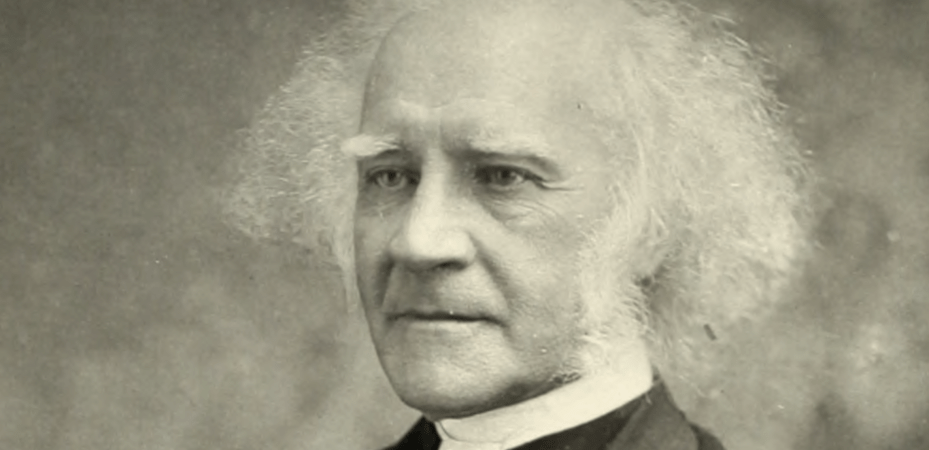
(Glasgow Herald, December 20, 1869)
LECTURE IN THE QUEEN’S ROOMS
On Thursday evening, a meeting was held in the Queen’s Rooms, under the auspices of the Glasgow Continental Society, and of the Gospel in Spain, for the purpose of hearing from the Rev. A.N. Somerville a lecture descriptive of the visit he made to that country during his last summer as a deputy from several influential bodies, including the National Bible Society of Scotland. His journey was made with the view of encouraging the evangelical labourers there, and making himself acquainted with their work and with the varied openings for Christian agency. It will be remembered that during that period numerous interesting extracts of letters received by friends at home appeared from time to time in the Herald.
The Confederate Association above-mentioned is an alliance of several Christian friends of all denominations in Leeds, Liverpool, and Glasgow, having already representatives working in Spain, and who are desirous of using to advantage the means and openings which, by the late remarkable succession of events, have presented themselves for the furtherance of the Gospel in the Peninsula. It may be added that the members of the Glasgow branch of the new Confederation also belong to the Glasgow continental society. We are informed that the special object of Thursday night’s proceedings was that of making known to the Glasgow public generally the existence of claims of the Confederate association, to bringing prominently under notice, in a comprehensive and attractive form, what had in times past prevented the spread of the Gospel in that fair but unhappy country, what was now taking place in it, and the work which, with God’s blessing, it was proposed to carry out.
The doors having been opened half-an-hour before the time announced for the lecture, the large hall was within a few minutes nearly entirely filled by an auditory composed of many of the most influential of the Glasgow public. The originators of the arrangements must have exercised no small ingenuity in interesting and bringing together such an assembly.
Among those present we may mention such names as those of Sir James Lumsden, the chairman, Drs Gibson and Buchanan ; Professors Fairbairn and Islay Burns ; Janes A. Campbell, Esq., J.W. Hannan, Esq., Hugh Baird, Esq., J. G. Smilth, Esq., Frank Ferguson, Esq., J. Thomson, Esq., J.B. Mirlees, Esq., James MacNeil, Esq., of Londonderry, and many others.
A colossal map of Spain had been specially prepared for the occasio, and contributed greatly during the evening to the clear comprehension on the part of the audience of the various geographical positions.
At eitght o’clock, Dr Fairbairn having opened the meeting with prayer, Sir James Lumsden formally introduced the subject to the assembly, expressing at the same time his gratification in having the opportunity of supporting his rev. friend in his continued efforts to impart in an interesting form to others the results of his observations and experiences in foreign countries.
The lecturer then proceeded to give a rapid but graphic sketch of the Spain of ancient times, thereafter briefly touching on its early Christianity, and referring to historic personages—royal, military and ecclesiastical. Coming down to the Reformation period, he gave some account of how three centuries ago Philip the Second—grim Philip, the husband of our “bloody Mary,” Philip of the Armada—aided by the Inquisition, set his heel on the cause of the gospel, and in ten short years stamped out the truth in Spain. Casting a glance at the language, literature and history of the country, he preceded to give an account of his recent journey, and specially referred to the impressions of his first two days in Madrid, and to the privilege he had enjoyed of personally selling a large number of the Scriptures at the fair of San Isidro. Noticing in a few sentences the remarkable aspect of Protestant Christianity in the Spanish capital, he referred to the various provinces and important cities through which he had passed, and pausing successively over Seville, Huelva, Cadiz, Gibraltar, and Tangier, related many interesting incidents of travel in connection with Moors, Jews, sailors, and the country people. In connection with Huelva he reminded the students of history that it was from the harbour of Palos in its near vicinity that Columbus set sail on his memorable voyage of discovery. He remarked that Huelva itself promised ere long to become a place of no small importance on account of the valuable copper and sulphur mines of Tharsis—mines which are among the most valuable in the world for the production of copper, and which it is believed were worked as far back as in the days of King Solomon by the Phœnicians, and in later times, for several centuries, the the Romans. The name “Tharsis” is easily recognisable in the ancient designated “Tarshish.” At the present time the workings at Tharsis are in the hands of a Scotch company, whose head-quarters are in Glasgow, 1500 men are employed in the mines, and they and their families form a population on the spot of some 5000 souls supported by the company. Passing through Granada, the ancient Moslem stronghold, he recalled to the minds of his hearers how much, even in recent times, Spaniards had suffered fro the sake of the Truth, instancing the names of Matamoros, Frigo, and Alhama, who, no further gone than 1863, languished for two years and a half in the dungeons of Granada. Mr Somerville wound up with an eloquent appeal, in which he expressed the hope that Glasgow would arouse itself to take advantage of the wonderful opportunity now afforded of flooding with the light of truth that land over which the darkness of night had so long brooded ; and, in allusion to those enriched by the mines of Tharsis, expressed a hope that the merchant princes of Glasgow, like the “kings of Tarshish,” would come forward, bringing their “presents” for the cause of Christ in Spain.
At intervals during the lecture, and with special allusion to the incidents noticed in it, appropriate pieces of music specially composed were rendered with much taste by an amateur choir of ladies and gentlemen who had voluntarily tendered their services, under the leadership of M. Seligmann. The work of preparatory training was carried out under the efficient direction of M. Bromhead. One of the pieces was a hymn, which, sung in Spanish, produced an effect both pleasing and novel. The other pieces with the exception of Gounod’s “Jerusalem,” were original, both in words and music.
A cordial vote of thanks having been awarded to the lecturer.
Mr. Somerville, in replying, among other acknowledgements expressed his deep obligation to Mr A.S.D. Colquhoun, secretary to the Glasgow Spanish Committee, whose unwearied and skilful service had been essential to the success of the enterprise.
The assembly then united in singing part of the 72d Psalm, and Dr Gibson pronounced the benediction.
