
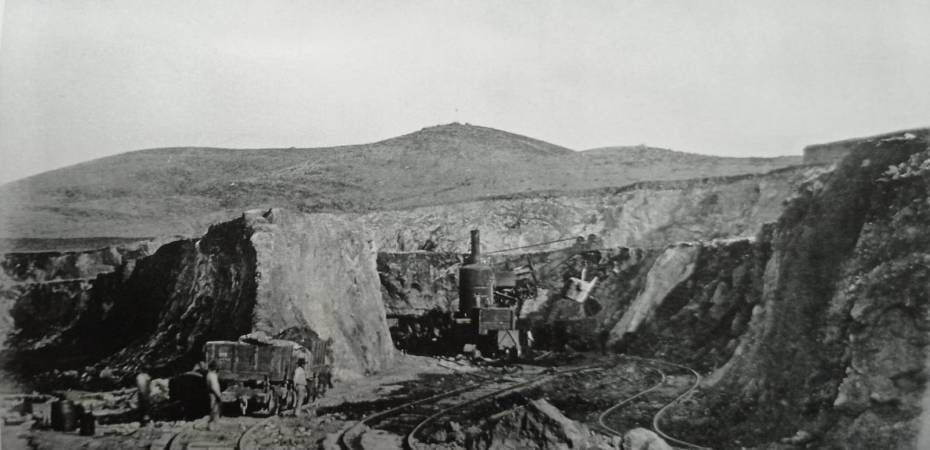
(A Huelva Gazette article based on the 1868 Mining Law)
To the discerning investor and industrialist in the United Kingdom, particularly those with an eye for the mineral riches of foreign lands, a significant development has recently transpired in Spain. On the 29th of December last, the Provisional Government, under the auspices of the Minister of Fomento, Don Manuel Ruiz Zorrilla, issued a sweeping decree establishing the general bases for a new mining law. This legislative act, following on the heels of the reforms of March 1868, promises a radical shift in the Spanish mining landscape, one that should undoubtedly pique the interest of British enterprise.
For too long, the immense mineral wealth of Spain – a veritable treasure trove lying beneath its sun-drenched soil – has been hampered by archaic laws and a suffocating bureaucracy. Our own industrial prowess, built upon abundant coal and iron, has long viewed with a mixture of envy and frustration the untapped potential across the Bay of Biscay. The old “regalist” principle, declaring all mineral deposits the property of the Sovereign, whilst theoretically sound, often led to convoluted processes and a lack of security for those daring enough to venture their capital.
But now, a new philosophy is at play, one that echoes the liberal economic principles so cherished in Glasgow and beyond. The very essence of this new decree rests upon two fundamental pillars: ease of concession and security of possession.
No longer, it would seem, will British companies face protracted administrative labyrinths merely to gain access to a promising lode. The decree explicitly states that, without requiring “studies, investigations, procedures, or protracted dossiers,” the Provincial Governor shall now grant mineral concessions in “free land” upon the simple payment of a census, right, or patent. This is a bold and welcome departure, akin to the expeditious manner in which the American Union grants land to its intrepid pioneers. Imagine, gentlemen, the time and expense saved by this streamlined approach!
Even more crucial is the guarantee of perpetuity for these concessions. This, in the words of Minister Ruiz Zorrilla, will ensure “very firm properties” from which owners cannot be dispossessed, provided they diligently pay their annual dues. This measure aims to annihilate the perpetual threat of “denuncias” – claims made by third parties that have plagued mining ventures in the past, causing endless litigation and uncertainty. For too long, the spectre of a mere “denunciador” could undermine years of painstaking labour and substantial investment. With this new law, the industrious miner can finally be assured of reaping the fruits of his efforts, secure in his possession.
Consider the implications for Huelva, a region already known for its rich copper deposits. British capital has, of course, been active there for some time, navigating the existing complexities. But with these new provisions, the path for expansion and new ventures appears significantly smoother. The freedom granted to miners to exploit their holdings without undue technical interference, save for necessary safety regulations, speaks volumes of a progressive outlook. The State’s role is now clarified as a regulator, not an impediment.
Furthermore, the introduction of the “mining pertinence” – a square unit of 100 metres by 100 metres with indefinite depth for key metalliferous and combustible substances – offers a clear and precise demarcation of claims, reducing potential disputes over boundaries.
While the decree does not explicitly delve into the minutiae of foreign capital participation in Spanish companies, the spirit of liberalization and the emphasis on the “individual” or “company” being able to acquire these perpetual rights suggests a welcoming environment for overseas investment. The previous strictures that often favoured domestic entities appear to be loosening, driven by a desire to attract the necessary capital and expertise for industrial advancement.
Of course, vigilance remains paramount. Concessions can still be forfeited for non-payment of the annual canon or prolonged inactivity without justification. However, the law provides for a two-year suspension of work for significant capital investments, provided there are valid reasons and royal authorization is obtained. This offers a degree of flexibility crucial for the inherent risks of mining.
For British companies, long a driving force in global mining, this new Spanish law presents an opportunity of considerable magnitude. The promise of secure, perpetual concessions, coupled with simplified acquisition procedures, should make the Spanish mining sector, and Huelva in particular, a most attractive proposition for the discerning investor. The path is being cleared; it is now for our industrialists to stride forward and claim their share of Spain’s subterranean bounty.
