
REPORT BY THE DIRECTORS OF THE Tharsis Sulphur & Copper Co. LIMITED, TO THE FIRST ORDINARY GENERAL MEETING OF THE MEMBERS APPOINTED TO BE HELD WITHIN M’LEAN’S HOTEL, St. Vincent Street, Glasgow, ON WEDNESDAY THE 23D DAY OF OCTOBER, 1867, AT ONE O’CLOCK AFTERNOON.
REPORT BY THE DIRECTORS.
IN presenting the following brief Report, the Directors deem it proper to explain that the present Meeting is held pro forma, in compliance with the Articles of Association of the Company, which provide that “The First General Meeting shall be held within Twelve Months after the Registration of the Company.” No balance sheet or state of accounts fall to be produced to this Meeting. The addition of Mr. HENDERSON’s patent processes, and the erection of the relative new machinery on the Mines, which involve to some extent a re-modelling of the present system of operations, and of the books and accounts connected therewith, render it necessary that a detailed balance be deferred till the subsequent General Meeting, which will be held in August next year, when full reports and accounts of each department of the Company’s operations will be laid before the Shareholders.
The Directors have pleasure in reporting to this Meeting as follows:— The Company was duly incorporated, under the “Joint-Stock Companies’ Act, 1862,” on the 27th October, 1866. The preliminary work, incidental to forming and setting in motion a commercial undertaking of such magnitude, commanded a large amount of the time and attention of the Board; and the Directors believe that the various arrangements and appointments which have been made will prove satisfactory to the Members, and eminently beneficial to the Company. The Directors having previously caused inquiry to be made as to the validity of the titles of the Huelva Mining Company, and these having been found in order, no time was lost in making the necessary arrangements to enter on possession of the Mines, at and from the 1st of December, 1866. These arrangements were subsequently carried through by a deputation of the Board, who proceeded to Spain and who took formal possession of the Mines on behalf of this Company, besides attending to the inventories and valuations of the stocks of Mineral, Mining Stores, Plant, &c., taken over in terms of Lease.
The Directors arranged that the staff on the Mines should, for the most part, be transferred to the new Company, and in this way the various operations have gone on, without further interruption than was necessary for the stock-taking and valuations just referred to. In Mons. LE BOURG, the Company have an able and energetic Manager in Spain; and the devotion which he brings to bear on the performance of his onerous and arduous duties has earned for him the respect and confidence of the Board. In view of the earliest possible introduction of Mr. HENDERSON’S patent processes on the Mines, it was of paramount importance that there should be some one resident there competent to take charge of the erection and management of the new Extracting Works. The Directors have pleasure in reporting that they succeeded in obtaining the services of Mr. THOMAS DOWN, formerly Manager of the Staffordshire Copper Extracting Co.’s Works, who, from his intimate acquaintance with Mr. HENDERSON’S patent processes, his practical knowledge of mining, and his familiarity with the Spanish language (acquired during a lengthened residence in Spain), was peculiarly fitted for occupying the position in question, with credit to himself and advantage to this Company.
The private and confidential Report to the Board from Mons. LE BOURG, is of the most satisfactory and exhaustive character, in all respects. The Directors refer for details of the operations on the Mines to the separate Report of Mr. DOWN. The attention of the Board was early directed to the prosecution of the Railway; and, as soon as practicable, the Engineer’s plans were prepared, tenders obtained, and a contract ultimately concluded with Mr. G. FEATHERSTONE GRIFFIN, of London. Owing, however, to the alterations on and rectifications of the original conceded Line (which, on the ground of economy, were considered advisable by Mr. MOORE, the Company’s Engineer) having been objected to by the Spanish authorities, and regarded by them as equivalent to the origination of an entirely new Line, requiring a fresh concession, the Directors much regret that a delay of at least six months was incurred, besides considerable expense, in observing the formalities requisite in Spain to obtain this new concession. The Directors also regret that important modifications of the Line as planned, involving considerable extra cost of construction, were insisted on by the Spanish Government officials, ere it was finally approved and passed. They are happy to report that the Royal Assent was finally given on the 24th August last, and since then the Railway Works have made considerable progress.
The Directors refer to the accompanying short Report from the Engineer, for further information. The present production of Copper on the Mines—the total annual quantity of which will be materially increased by the introduction of the new processes referred to—induced the Directors to consider the importance and advantage to this Company of having a refinery in this country, the exclusive property of the Company, where the whole of this Copper could be run down anew, and its market value enhanced, through an increase in its purity; thus averting the heavy loss formerly incurred by the French Company, in selling this Copper as it came from the Mines in unrefined slabs. The Directors are glad to report, that they succeeded in purchasing the Willington Copper Works, on the Tyne, on terms advantageous to this Company; and they have now most commodious premises for the refining of all the Copper imported from Spain, besides ample room for the storage of Pyrites for the Tyne district, and the manufacture of the spongy Iron shipped to the Mines for the purpose of precipitation. The quantity of Copper imported from the Mines, refined, and sold, since the Company commenced its operations, amounts to 1,070 tons; and although the Copper Market, during the current year, has ruled exceptionally low, a satisfactory profit has been realised to the Company.
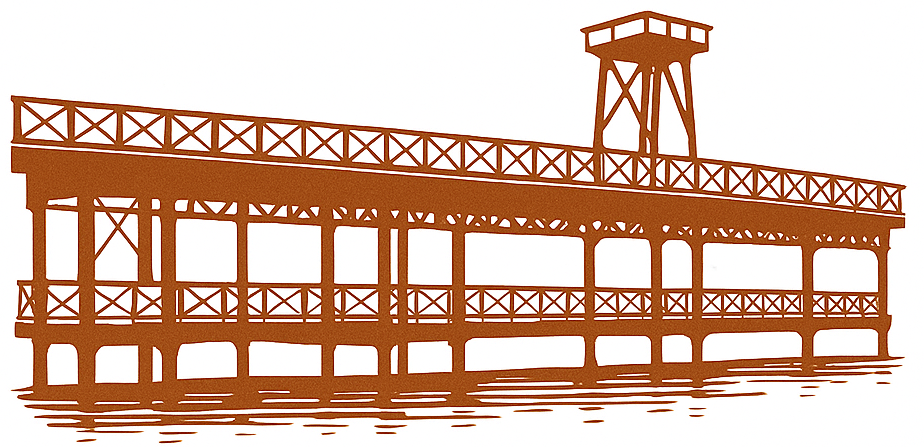
Until the Railway is completed from Tharsis to Huelva, and the Pier and Wharves, with their appliances for loading and discharging erected and in use, the importation of Pyrites on a large scale will be both difficult and expensive. The Directors, however, being anxious to have the Ore introduced among consumers in this country, contracted to deliver, during this year commencing in May, about 30,000 tons. To convey 5,000 to 8,000 tons per month from Tharsis to El Charco, a distance of over 20 miles, and by difficult roads (whence it is conveyed in lighters to the ships at Huelva), involved the organisation of a large force of mules and carts. The cost of this transport, including the lighterage to Huelva, ranged from 20/ to 23/ per ton. Owing also to the great number of carts collected together in June and July, it was necessary to load them without choosing the Mineral, and there has resulted a considerable decrease in the Copper contents—the more so, that it was also necessary at that period to extract Mineral from the excavations for the railway tunnel, where it enters the Mine. With the low prices that have been ruling for both values of Sulphur and Copper, the charge for transport of Pyrites does not encourage large importations, until the benefits from the Railway are obtained, when this Company will be enabled to meet successfully all competition.
The Pyrites imported since April has amounted to 32,000 tons, of which there have been delivered under contracts about 22,000 tons. The balance in store in this country to meet the deliveries under these contracts is 10,000 tons, while there are 8,000 tons at Charco awaiting shipment. From the magnitude of these operations, which require at all times a large floating capital to work them to the best possible advantage, together with the large amount already paid for stocks of Mineral, Plant, and Stores of all kinds at the Mines; the new Machinery now in course of erection there; the purchase of the Willington Refining Works; and the cost of the Railway and Rolling Stock, it will be evident to the Shareholders, as it has been of late to the Directors, that the present capital will be found for the first few years proportionally inadequate. The Directors have given this subject their most anxious consideration, and it appears to them that, for a time, it will be necessary to supplement the existing capital. They are, however, of opinion that this should not be done by the creation of additional Shares, or Permanent Capital. The Directors consider that this Supplementary Capital should be created only temporarily, and extinguished at the end of six years. They accordingly recommend to this Meeting to consider the following proposal, viz.: To issue exclusively to the Members of this Company, in the first place, debentures for £100,000, bearing interest, guaranteed by the Company at the rate of 7 per cent. per annum, payable half-yearly, and redeemable at the end of six years—the Directors taking power to purchase in these debentures, when they consider it for the interest of the Company to do so.
As an illustration of the undoubtedly safe and attractive character of these debentures as an investment, the following calculation of the probable revenue from the Railway, apart from the ordinary profits of the Company, may be given.
ESTIMATED REVENUE FROM RAILWAY. 200,000 tons of traffic per annum to and from the Mines, @ 5/ per ton, £50,000. DEDUCT. Working Expenses, Depreciation, &c. (estimated by Engineer, @ 1/11 1/2 per ton), but say 2/6, £25,000. 7 1/2 % Interest on £100,000 Debentures, 7,500. Total Deductions, 32,500. Leaving a surplus of £17,500.
This Company can well afford to pay 5/ per ton to the Railway for the carriage of its Mineral, Copper, and Stores, as this rate will effect a saving over the present means of conveyance of from 15/ to 18/ per ton. This saving, on the prospective importation of 150,000 to 200,000 tons of Pyrites per annum, will, of itself, produce a sum which will afford a highly remunerative dividend on the called-up capital of the Company.
The Directors have given their constant and earnest attention to the organisation and development of this important commercial undertaking, which has devolved upon them a large amount of anxiety and labour. These services have been, and will continue to be, most cheerfully rendered, so as to promote the future interests and prosperity of the Company, in which they individually and collectively hold no inconsiderable interest, and to the future of which they look forward with undiminished confidence. They believe that the vast resources of these Mines (which have to be seen and surveyed in order to be duly appreciated), have within them the elements of great and lasting prosperity; and that, at future General Meetings of the Company, the Directors will have the agreeable satisfaction of proposing acceptable dividends, as a return on the capital invested.
By order of the Directors, CHARLES TENNANT, CHAIRMAN. JONATHAN THOMSON, SECRETARY. GLASGOW, 18th October, 1867.
