(The Sun—May 30, 1864)
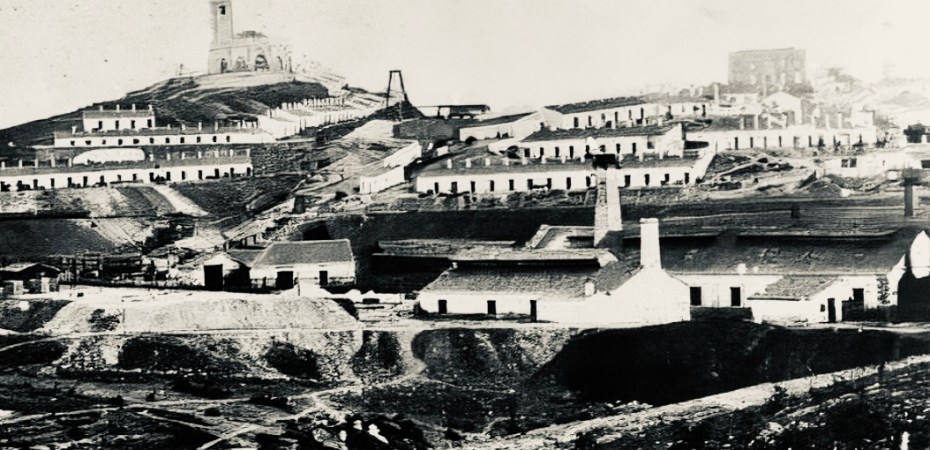
M. Deligny, now engaged in working the copper mines of San Domingos, in the province of Alentejo, Portugal, has just sent a bucket-wheel, dating from the Roman period, to the Conservatories des Arts-et-Metiers, and a paper on the subject to the Academy of Sciences. The above-mentioned mines, where this wheel was found, were worked in the earliest ages by the first nations that peopled the Iberian Peninsula. The chief mines in Portugal were Setubal and Troya ; in Spain, the mountains of Tharsis and Zalamen, or Soloman, whither Solomon and Hiram sent their fleets to procure the copper required for the decoration of the Temple. The great importance of these mines is shown by the masses of scoriae still visible around, and which are estimated at 20 millions of tons, accumulated in the course of several ages ; the copper extracted is then calculated at 800,000 tons. These scoriae also reveal two different systems of treatment of the ore, pertaining, one to the Phoenicians, the other to the Roman period, there having been an interruption between the two, caused by the wars between Carthage and Rome, and the conquest of the country by the latter. It would appear that the Romans resumed the working of these mines under Ceasar, coins bearing his effigy and that of Augustus having been found in them. The working was not discontinued until the invasion of the barbarians under Honoriu. An inscription preserved in the Mining School at Madrid shows that, under Nerva, the working of the mines of Thartesis Boetica was regularly organised. The Romans worked them systematically ; the waters were drained off through galleries, which in many cases attained a considerable length, as much sometimes as 1,400 metres. The ore was extracted through shafts at distances of 26 to 40 metres. When the shafts were very deep, an additional shaft for ventilation was sunk close to the main ones ; they sometimes were 80 metres in depth. But as the hardness of the rock sometimes prevented the miners from continuing their galleries below the level of the waters, these would accumulate in certain places, and then a bucket engine was used to pump them out. The one sent to the Conservatoire, and discovered at San Domingos, is 6.66 metres in diametre. The spokes are of fir, the axil and its supports of oak. The buckets, 25 in number, are 16 centimetres in width, by 50 in length and 13 in height. All the pieces of the wheel are joined without any metallic fittings. The wheel was set in motion by men in the manner a treadmill is worked. The quantity of water thrown out per second was 1 84 hectolitres. This wheel dates from the year 412 of our era, and has therefore existed 1,452 years ; it is certainly the oldest relic of its kind.
