(Extract taken from The Cities and Wilds of Andalucia (1849) by Robert Murray)
Early the next morning Don Ignacio and myself were in the saddle, and waiting beside a fountain on the outskirts of the village for a friend, who had promised to accompany and guide us to the mines of the Rio Tinto. As soon as he appeared, we struck into a bridle-path that crossed several ridges where their summits were most broken and precipitous, and was altogether so villainously bad, that nearly an hour and a half elapsed ere we accomplished the whole distance, which was no more than a league, or four miles. From the moment of starting, however, the point of our destination was indicated to our eyes by a column of thin white vapour rising uninterruptedly from one spot, and then streaming away to the south; this was the smoke occasioned by the calcination of the copper ore before it is removed to the smelting furnaces.
As we drew nigh to the mines, the scenery became more savage and dreary; at one point, on rounding the shoulder of a rocky range, there rose before us a ridge of dark red hue, every cliff and rock of which, in addition to the fantastic shapes assumed, seemed as if scorched and rent by the all-powerful action of fire. A little further on, the village of the Rio Tinto came into view, situated in a narrow vale formed by the continuation of the ridge just mentioned and another equally lofty; on its sides hung some straggling pines, and occasional patches of cultivation, to balance the gaunt aspect of the other, upon which sterility seemed branded for ever.
My first move, on reaching the village, was to present a letter of introduction of which I was the bearer to the chief director of the mines; and as soon as that gentleman comprehended the purport of my visit, he volunteered to accompany us through them as soon as he had heard mass. In the meantime we strolled, after leaving him, to the mouth of the shaft from which the ore was drawn up. The whole machinery, if indeed it was worthy of that title, was of the rudest description. It simply consisted of a windlass, at which four men were stationed, and undergoing the severest labour in drawing up bucketfuls of ore. On one of the party making a remark to that effect, the oldest of the labourers bitterly exclaimed, “Si, y para ganar seis reales;” and, in truth, fifteen pence was but a poor requital for the incessant toil demanded by their occupation.
The director, as soon as his morning devotions allowed him, led us to a door in the side of the mountain, over which an image of the Virgin was placed, to watch over the safety of all who passed beneath it. This was the entrance for the miners and others; a long passage then became visible, which we traversed without inconvenience till we arrived at a shaft, where it was necessary to descend by ladders. The gallery was perfectly dry, with the exception of one or two spots upon which moisture was perceptible, and over these planks were laid. This precaution is absolutely necessary, for the water of the mines is so surcharged with the sulphate of copper as to corrode and destroy almost everything with which it comes in contact.
On descending the ladders, we found the temperature sensibly increasing, and then entered a lofty and vaulted gallery, the result of the workings of ages. The ore does not run in veins, as is usual in other mines, but is found disseminated in the rock, which here forms entire hills. The process, therefore, of extracting it is very simple; it is not mining but quarrying, nothing more being necessary than to hew out the rock and send it in blocks to the furnace. As if, however, to counterbalance the ease with which it is obtained, the percentage of metal is so poor as scarcely to repay the labour of the miners; three per cent., as I was informed, being the utmost obtained from the richest portions of the rock.
On all parts of this spacious gallery, above our heads and on its sides, were beautiful crystallisations of copperas; these were caused by the water that percolated through the crevices of the rocks, and, spreading over the interior surface, deposited a lining of the most delicate blue and white tint it was possible to imagine. Further on, we entered a side gallery, in which the temperature was equal to that of an oven, and here were a few miners at work, stripped of every unnecessary article of clothing, yet with the perspiration streaming from every pore. Their haggard looks and wasted forms sufficiently denoted the unhealthiness of their occupation, and how dearly existence was purchased.
The principal attraction of the mine, however, is its stream of sulphate of copper, without which it is questionable whether its working would not be abandoned. The waters issue from the mine at two or three different points, and are collected a little below the village into a stream towards which we bent our steps to behold the silent formation of the copper, by a process we owe to the light of science. Along the bed of the stream a wooden trough was conducted, into which the waters flow, and in this were laid plates of iron. By a chemical affinity it is unnecessary to explain, the particles of the iron are so acted upon as to be replaced by those of copper, which, when refined, yield from seventy to eighty per cent of pure metal. As soon as one plate is judged to be completely transmuted, it is removed, and another substituted, so that the process is continually in action. Our conductor lifted up one of the lids placed to prevent extraneous substances from falling into the troughs, and showed to our view the copper at the bottom, retaining the original form of the iron plates, and by the force of the current burnished as bright as any hand could make it. On taking a portion of it in the hand it crumbled into powder, and when dry, was scarcely to be distinguished from the rust of iron. The water, it is hardly necessary to say, was intensely acid, from whence the stream is termed the “agua agria.” Lower down, it serves to turn a wheel employed in the smelting-house, wherein every part of the machinery was constructed in the most rude and simple manner.
A good deal of the copper is sent to Seville, where it is used in the cannon founderies, and a smaller portion finds its way to Segovia, for the purpose of being issued in the shape of coin. The chief obstacle, however, to the profitable working of the mine arises from the scarcity and consequent dearness of fuel. The article principally, if not solely, used is pine wood, which is brought from a great distance on the backs of mules; the nearer localities have long ago been exhausted of their timber, while from the improvident spirit so characteristic of this country, no pains have been taken to rear up forests in the room of those the axe has cleared away. Very lately the price of wood had risen, in consequence of the increased distance from whence it must be brought; and should a further rise take place, the effect would be ruinous to the establishment.
Mounting our horses, we followed the windings of the road till it brought us to Planes, where there is a manufactory of copperas, the production of which is effected by the boiling and evaporation of the agua agria. Here, as in the other establishment, everything was primitive and rude; the fuel was the brushwood of the neighbourhood, bundles of which were from time to time cast below some copper pans in which the liquid was heated; in another corner were some tubs provided with sticks, upon which, when it cooled, the copperas might crystallise.
Planes is situated, or rather hangs, upon the side of the mountain ridge that holds the ore in its depths. From thence we proceeded to the site of the ancient mines by a narrow path, where a stumble or false step of our horses might have sent the luckless rider down the steep declivity into the bed of the Rio Tinto, some hundreds of feet below. These are situated on the reverse of the ridge, very nearly at the back of the modern workings. As the path approached them it was fringed on either side by cork trees, skirting fields of ripening grain, and finally wound between immense heaps of scoriae and rubbish, that rose grim and swarthy above the luxuriant scene. In truth, continued hillocks of the latter attested the antiquity of the mines, and the toils of past generations.
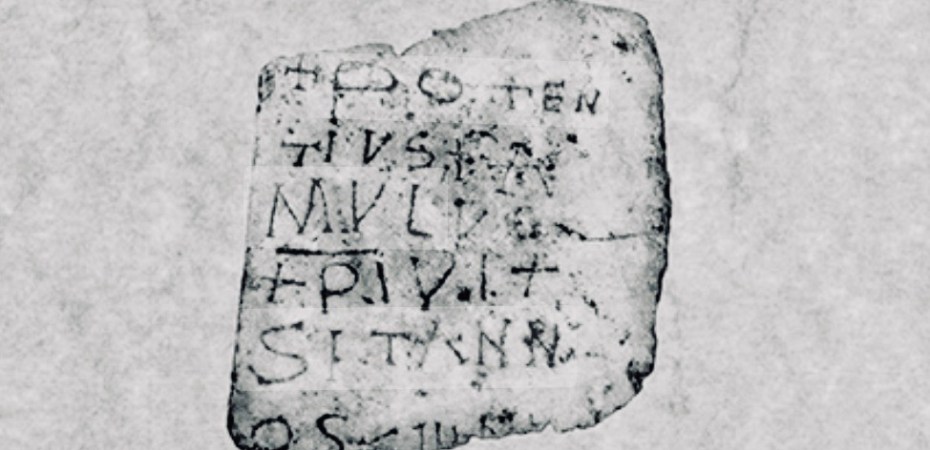
There were, besides, other memorials of the past in the vestiges that survived of the ancient Bætica, for here was once a Roman town, called into existence by the mineral treasures of the mountain. These relics, for the most part, consisted of large blocks hewn out of the reddish stone of the neighbourhood, intermingled with fragments of overthrown columns; close by was the cavern-like entrance to the ancient mines. At what date, or by whom, the ore was first extracted, we have no means of ascertaining; but, at all events, from the discovery in an old working of an inscription to the Emperor Nerva, we may form some notion as to the antiquity of the town that had Roman miners for its population, and fell in the general decay of the Roman empire.
