(Monmouthshire Merlin—September 19, 1835)
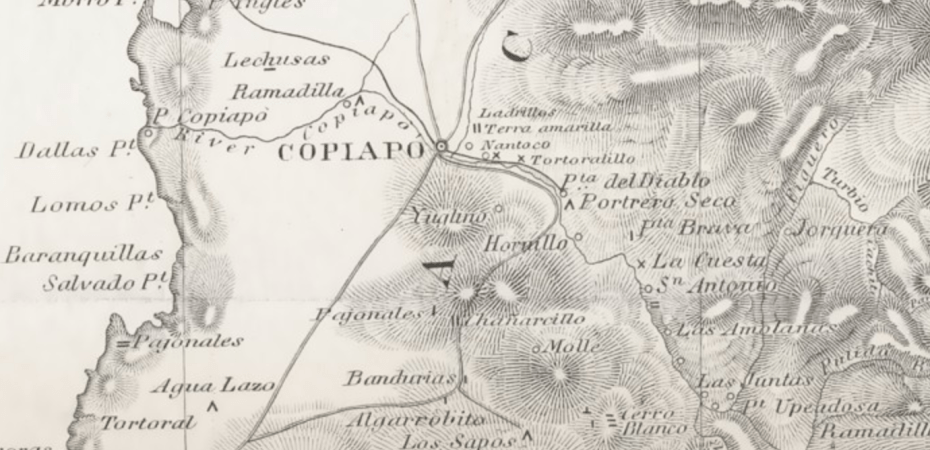
Extract from the “Mining Journal,”—A company was formed in the month of April last, for the purpose of working more effectually some valuable copper and silver mines in the province of Copiapo, in the north part of Chile. The copper mines consist of those of Checo, Puquios, Morados, San Jose, and Algaroba, besides extensive setts in the mineral of Las Animas, which latter has been secured for a term of nine years, the whole comprising upwards of 30 different and distinct setts of mines, most of which are already in a state of productive working, yielding ores producing on an average 30 per cent. of copper ; none of these mines have been worked to any depth, and the ores can therefore be raised to the surface at a trifling expense. Several valuable estates have been also added to the mining property, affording pasturage for the mules employed at the mines. The silver mines have been latterly neglected, owing to the difficulty of reducing the ores in the country ; but it having now been satisfactorily ascertained, that if the ores are sent to this country for reduction in a properly condensed state, they will leave a large profit, it is to be presumed these mines will be actively worked. A considerable quantity of silver ores and leavings at the mines was left by those who originally worked them, ready for dressing. The mines are contiguous to the coast, having the advantage of a constant supply of water, equally available for irrigation and mill power ; good roads, an efficient mining population of free labourers, and the facility of good harbours, and situated in a healthy and temperate climate.
Insights
- At this time Cornwall was still the world ore producer and leader in mining technology although it was getting more and more expensive to extract the ore.
- Swansea was referred to as “Copperopolis” the smelting centre of the world, mainly due to strategic location close to the Cornwall mines, the abundance of coal for smelting and the bonded warehouse system.
- The higher grade ores in the Chile mines were already starting to make their mark on global supply, later going on to dominate the market.
- Favourable export legislation in Chile together with import legislation (bonded warehouses) in Britain facilitated this trend.
- The growing confidence of British mining expertise and capital financing bold overseas mining projects.
- An industrial revolution driving the insatiable demand for mineral ores.
